Airjoule (AIRJ) Continues to Slide, Leaving Investors Questioning the Value Proposition
Airjoule’s latest trading session, which closed at 02:24 PM Central Europe on Friday 23 October, showed a modest rise of 0.33 %. At the time of reporting, the stock traded at USD 2.94, a price that is still dwarfed by its 52‑week high of USD 6.65 set on 12 August 2026. The company’s market capitalisation sits at USD 230.1 million, with only USD 1.7 million exchanged over the past 24 hours—an astonishingly low liquidity for a firm claiming significant assets under acquisition.
A Troubling Trend
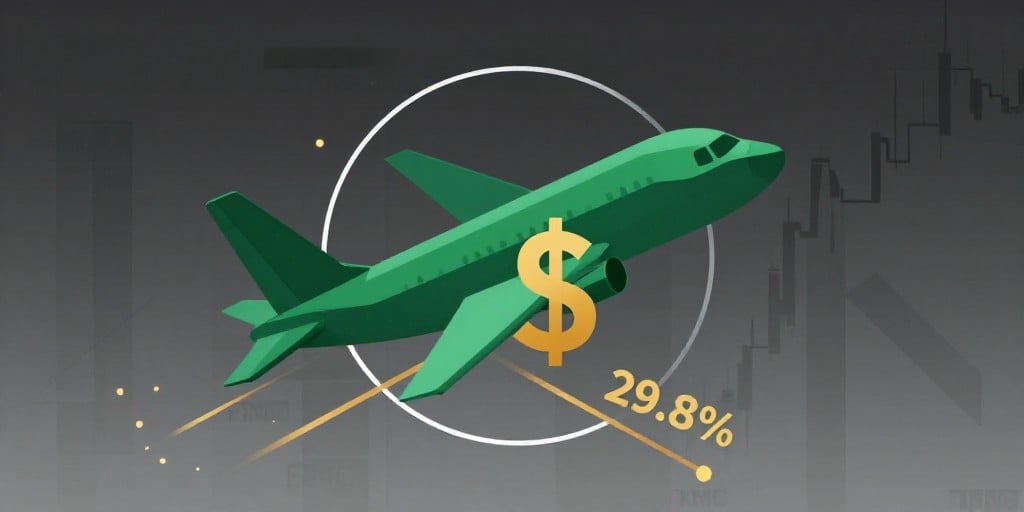
Since the close of last month, Airjoule has declined 29.82 %. Even the 200‑day simple moving average, a common gauge of long‑term sentiment, remains comfortably above the current price at USD 3.94. This suggests that the stock’s recent dip is not merely a short‑term blip but part of a broader erosion of investor confidence. The company’s supply—73.3 million shares—combined with such weak trading volume, raises the spectre of a potential liquidity crisis if momentum shifts.
The Competitors’ Mirage
When juxtaposed with peers, Airjoule’s performance looks even more bleak:
| Stock | 24‑hr Change | Current Price | Market Cap |
|---|---|---|---|
| Alico (ALCO) | +0.19 % | USD 37.08 | USD 274.6 m |
| Southport Acquisition I | 0 % | USD 9.92 | USD 272 m |
| Gevo (GEVO) | +2.7 % | USD 1.14 | USD 274.4 m |
| Better Home & Finance Holding (BETR) | +30.16 % | USD 16.58 | USD 273.8 m |
| Cantor Equity I (CEPO) | +0.09 % | USD 10.78 | USD 274.9 m |
The stark contrast is undeniable. While BETR experienced a 30 % surge—driven in part by executive share sales that were routine and did not involve new issuances—Airjoule’s marginal gain offers little to suggest a turnaround. In fact, the company’s inability to attract meaningful trading volume may be a sign of deeper structural issues: a lack of compelling assets, a diluted ownership structure, or simply a market perception that the company’s blank‑check model is a speculative gamble rather than a sound investment.
The Blank‑Check Model: A Risky Proposition
Airjoule is a blank‑check company headquartered in Chicago, purporting to acquire businesses and assets through mergers, stock exchanges, or direct purchases. While such vehicles can occasionally yield high returns, they also expose investors to significant uncertainty. The company’s current valuation, roughly USD 2.94 per share, is less than half of its 200‑day moving average, indicating that the market is pricing in a substantial upside potential that has yet to materialise.
Given that the company has not yet disclosed any concrete acquisition targets or a clear strategy for turning its portfolio into value, the risk profile is high. Investors must ask: why is Airjoule trading at a price that suggests a potential upside when the very mechanism that is supposed to generate that upside—an acquisition—is still a blank check?
Regulatory and Corporate Governance Questions
Unlike BETR, which recently disclosed executive share sales that were fully compliant with SEC regulations, Airjoule has not published any recent filings that would illuminate its corporate governance or strategic direction. This lack of transparency is unsettling for shareholders who rely on regulatory disclosures to assess risk and performance.
Bottom Line
Airjoule’s slight uptick in the last trading session does not mask a broader trend of declining value and low liquidity. In an environment where peers are either flat or experiencing substantial gains, Airjoule’s performance is a warning sign. Investors should scrutinise the company’s forthcoming disclosures, assess the viability of its acquisition strategy, and weigh the inherent risks of a blank‑check vehicle that has yet to deliver on its promises.