Daikin Industries – A Calculated Pivot Amid a Volatile Market
Daikin Industries (6367.T) slipped 0.49 % in the 24 hours ending 5:26 PM Central Europe on Thursday, 22 October, trading at JPY 21,370. With a circulating supply of 279.7 million shares, the company’s market capitalisation stands at JPY 6 trillion, and the last 24‑hour volume reached JPY 18.3 billion. Its 200‑day simple moving average sits at JPY 21,512.95, a figure that suggests the current price is still a touch below the trend line.
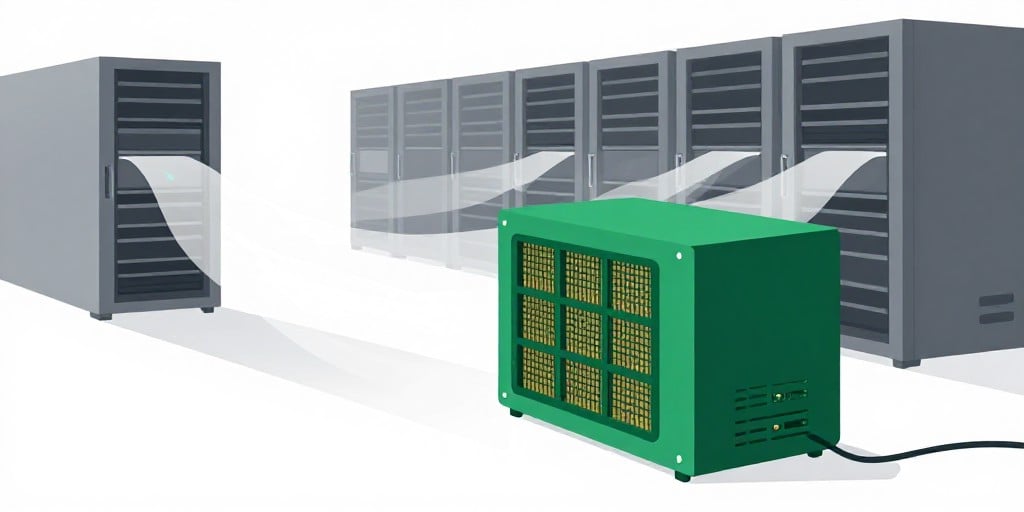
In spite of the minor dip, Daikin’s broader business narrative is anything but complacent. The firm has announced a positive outlook for its core refrigerant division, signalling a decisive shift toward low‑global‑warming‑potential (low‑GWP) solutions. Analysts observe that Daikin’s product suite—encompassing advanced refrigerants such as hydrofluoroolefins (HFOs) and low‑GWP blends—positions it well to capitalize on tightening environmental legislation and the rising demand for energy‑efficient cooling across commercial, industrial and residential segments.
A Strategic Advantage in the Low‑GWP Arena
The company’s pivot is not an arbitrary move; it is a calculated response to a regulatory environment that is increasingly hostile to high‑GWP substances. While the financial figures for the low‑GWP segment remain undisclosed, market estimates suggest a gradual expansion, particularly in the Asia‑Pacific and North America regions where demand for sustainable cooling is accelerating. Daikin’s early investment in research and development, coupled with its established global distribution network, affords it a competitive edge that is likely to translate into long‑term market resilience.
Market Context: A Broader Turbulence
Daikin’s performance must be viewed against a backdrop of broader sector volatility. Other Japanese stocks in the same trading window illustrate this trend:
- Komatsu (6301.T) – down 0.41 %, JPY 6,950, cap JPY 6.3 trillion, P/E 16.65.
- Japan Post (6178.T) – up 1.52 %, JPY 2,418, cap JPY 6.5 trillion, P/E 15.86.
- Fujikura (5803.T) – up 3.7 %, JPY 4,181, cap JPY 6.9 trillion, P/E 35.06.
- Sumitomo Electric (5802.T) – up 1.98 %, JPY 1,916.5, cap JPY 6.1 trillion, P/E 15.51.
- Toyota Tsusho (8015.T) – up 0.59 %, JPY 7,491, cap JPY 7 trillion, P/E 19.3.
Sumitomo Electric’s modest gains are tempered by a broader sector weakness affecting technology and financial stocks, underscoring the pervasive caution that currently grips the Nikkei 225, which has slipped toward the 64,300 level. Global indices, however, have shown modest resilience, buoyed by a slight uptick in U.S. equities after a volatile opening. These dynamics highlight the persistent market volatility driven by energy supply uncertainties, central bank policy expectations, and geopolitical tensions.
Daikin’s Core Business: More Than Air Conditioning
Daikin Industries is headquartered in Osaka and is best known for its air‑conditioning equipment, but its operations span multiple high‑tech arenas: chemical, oil hydraulics, defense systems, and electronics. The company’s history dates back to its IPO on 1 May 1949, and it remains listed on the Tokyo Stock Exchange. For those seeking deeper insight into Daikin’s offerings and corporate strategy, the official website (www.daikin.co.jp ) provides comprehensive resources.
Bottom Line
Daikin’s modest decline in share price is a blip in a larger narrative of strategic transformation. The company’s aggressive move into low‑GWP refrigerants positions it favorably against regulatory headwinds while tapping into a market that is steadily expanding. In an environment where even stalwarts like Komatsu and Sumitomo Electric face headwinds, Daikin’s proactive pivot could prove to be a decisive differentiator—one that investors should watch closely as the next wave of environmental compliance reshapes the cooling industry.