Corporate Insight – Engie’s Strategic Shift into Integrated Solar‑Storage
Engie (ENGI.PA) closed the trading session on Friday, 23 November, up 1.18 % at EUR 22.81, reflecting a modest rebound after a month‑long decline of 2.94 %. With a circulating supply of 2.5 billion shares and a market capitalisation of EUR 58.7 billion, the French utility remains a staple of the CAC 40, yet its recent move toward integrated renewable projects signals a decisive pivot from conventional generation toward a diversified, low‑carbon portfolio.
Market Snapshot
| Metric | Value |
|---|---|
| Current price | EUR 22.81 |
| 24‑hr volume | EUR 119 m |
| 200‑day SMA | EUR 26.14 |
| 52‑week high | EUR 29.89 (26 Feb 2026) |
| 52‑week low | EUR 19.46 (27 Oct 2025) |
The share price has slipped below the 200‑day simple moving average, suggesting short‑term weakness. However, the recent construction of the first co‑located solar‑battery plant in France may catalyse a new growth trajectory, positioning Engie as a front‑runner in the emerging distributed storage market.
The Parc du Buisson Initiative
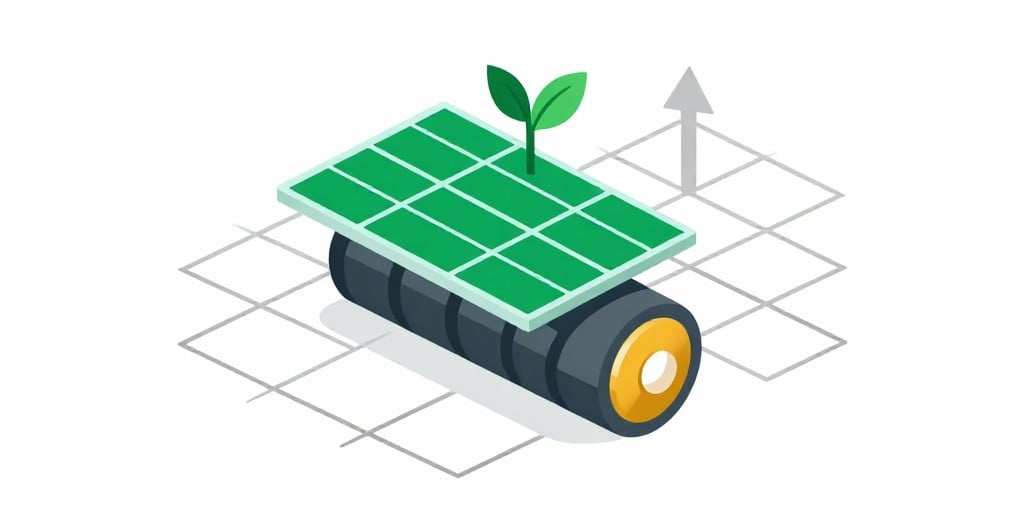
Engie has begun construction on Parc du Buisson, a flagship co‑located solar and battery project in the Centre‑Val de Loire region. The site, repurposed from a former quarry, will host a substantial photovoltaic array coupled with a battery energy‑storage system capable of sustained, full‑power discharge for several hours. This integration will:
- Enhance Grid Flexibility – By storing excess solar generation and delivering it during peak demand, Engie can mitigate grid volatility and reduce reliance on fossil‑fuel peaking plants.
- Drive Cost Efficiency – Combined operations lower balance‑sheet footprints and operational overheads, improving project economics.
- Bolster Renewable Credibility – The project demonstrates Engie’s commitment to a balanced mix of solar, storage, and gas, aligning with EU climate targets and investor expectations for sustainable infrastructure.
Forward‑Looking Outlook
Analysts project that the Parc du Buisson will reach commercial operation by mid‑2027, with an expected capacity factor of 25 % for the solar array and a storage capacity of 20 MW h. The dual‑asset model positions Engie to capture both generation revenue and ancillary services, such as frequency regulation and demand response. Given the current policy environment—particularly the EU’s focus on grid decarbonisation—this venture is likely to attract favorable regulatory treatment and potential subsidies.
Peer Context
While Engie’s solar‑storage venture gains momentum, several peers are navigating their own strategic challenges:
- Thales (HO.PA) remains a defensive play, trading marginally lower at EUR 228, yet its decade‑long appreciation underpins long‑term investor confidence.
- Danone (BN.PA) is refining its ESG messaging, a move that could mitigate regulatory risk but may dilute brand impact.
- Kering (KER.PA) faces a soft Chinese luxury market, underscoring the fragility of consumer‑driven cycles.
- Societe Generale (GLE.PA) demonstrates a diversified investment stance, balancing exposure across sectors amid CAC 40 underperformance.
- Orange (ORA.PA) continues to navigate competitive telecom pressures, reflected in its modest decline.
Within this landscape, Engie’s proactive investment in renewable storage signals a strategic divergence from traditional energy models. The company’s ability to capitalize on this niche could redefine its valuation profile, potentially lifting the share above the current 200‑day SMA as the project matures.
Conclusion
Engie’s foray into integrated solar‑storage at Parc du Buisson is more than a single project; it is a strategic declaration of intent. By combining generation, storage, and grid services, Engie is positioning itself to thrive in a low‑carbon economy while maintaining operational flexibility. Investors who monitor Engie should watch the project’s development milestones closely, as they are likely to drive significant upside in the coming years.