Corporate Analysis of Fomento Economico Mexican (FEMSA)
Market Performance Overview
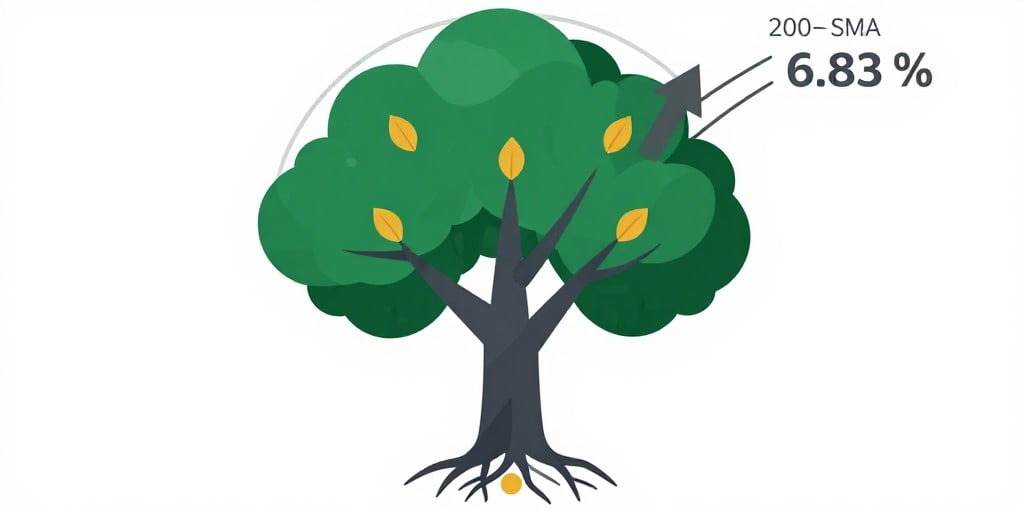
Fomento Economico Mexican (FEMSAUB.MX) closed the trading day down 0.56 % at 11:53 AM Central Europe on Thursday, 22 October 2026. The share price, currently trading around MXN 179, sits modestly above the 200‑day simple moving average of MXN 163.8, suggesting that the stock is still riding a mild bullish trend that has delivered a 10.49 % gain since the previous month’s close.
With a market capitalization of MXN 706.9 billion and a daily volume of roughly MXN 180.3 k, FEMSA remains a heavyweight in the Mexican market. Its 52‑week high of MXN 183 was recorded just a week earlier, while the low of MXN 145 was reached on 5 December 2025, underscoring the company’s capacity to generate steady returns within a defined range.
Comparative Peer Performance
The recent 24‑hour performance of related stocks paints a mixed picture:
| Stock | 24‑H% Move | Current Price | Market Cap (MXN bn) | P/E |
|---|---|---|---|---|
| Industrias Penoles SAB De CV | –6.59 % | 887.41 | 347 | 8.67 |
| Vista Energy SAB De CV | +2.04 % | 1 330.57 | 145.4 | 9.34 |
| Arca Continental SAB De CV | –0.77 % | 215.8 | 369.9 | 19.8 |
| Grupo Financiero Banorte | +0.99 % | 206.76 | 579.2 | 9.37 |
| Grupo Aeroport Del Pacific | +3.39 % | 413.93 | 242.2 | 22.4 |
FEMSA’s performance sits comfortably between the sharp decline of Industrias Penoles and the modest gains of Vista Energy, Arca Continental, Banorte, and Grupo Aeroport. The company’s price-to-earnings ratio, though not disclosed in the data set, is typically competitive within the consumer‑goods sector, reflecting its robust earnings from beverage distribution and convenience‑store operations.
Strategic Positioning and Competitive Edge
FEMSA’s core business lies in the production, distribution, and marketing of non‑alcoholic beverages across Latin America as part of the Coca‑Cola system. Its dual focus on supply‑chain excellence and retail penetration—through an extensive network of convenience stores in Mexico and Colombia—creates a formidable moat against emerging competitors. Additionally, FEMSA’s stake in Heineken diversifies its revenue streams and cements its status as a key player in the global beverage market.
However, the company’s reliance on the Coca‑Cola franchise introduces a vulnerability: any shift in licensing terms or supply disruptions could materially affect profitability. Moreover, the broader macro‑economic environment in Mexico, characterized by fluctuating consumer spending and regulatory changes, poses an ongoing risk that investors must monitor.
Conclusion
FEMSA’s current trading trajectory, while modestly negative for the day, remains anchored by a strong historical performance and a diversified business model that spans production, distribution, and retail. Its market capitalization and trading volume affirm its standing as a dominant force in the Mexican equity market. Yet, the company must continually navigate competitive pressures, supply‑chain dependencies, and macro‑economic volatility to sustain its growth momentum.