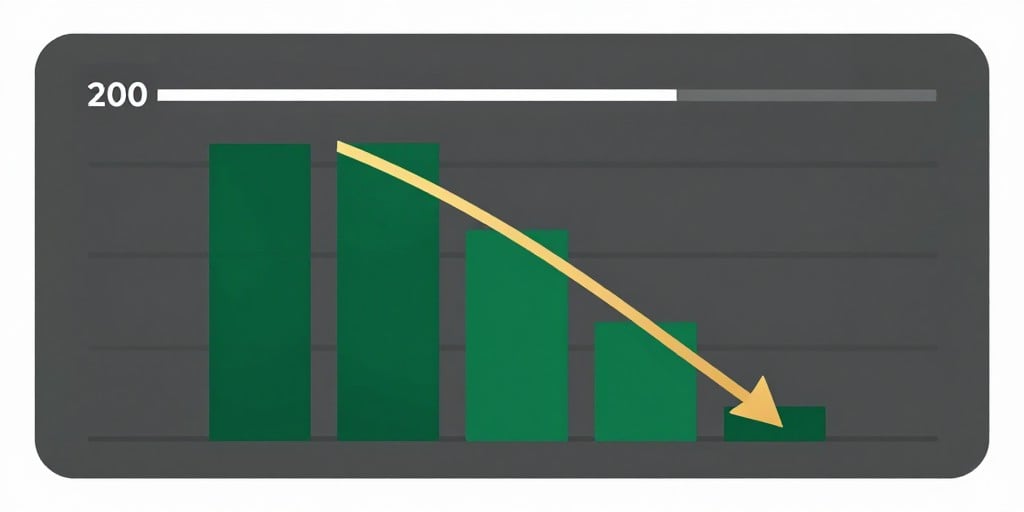
Corporate News Report – Goldman Sachs BDC Performance
Goldman Sachs BDC (ticker: GSBD) closed the trading day on Tuesday, 20 October 2026, at USD 8.59—a decline of 1.6 % relative to the previous close. The exchange‑listed equity traded 24 hours earlier for a total volume of approximately USD 6.6 million, a modest figure compared with the company’s sizeable market capitalization of USD 982.7 million.
At the close, the firm’s share supply stood at 112.6 million shares, and its 200‑day simple moving average (SMA) was USD 9.29, underscoring the current downside trend. Over the preceding 52 weeks, the stock’s high was USD 10.38 (recorded on 31 August 2026) and the low was USD 8.36 (recorded on 9 July 2026). Since the end of last month, GSBD has fallen 12.35 %, reflecting a broader pullback in the middle‑market investment space.
Peer Comparison – 24‑Hour Movements
| Stock | 24‑hour change | Current price | Market cap | P/E ratio | Notable event |
|---|---|---|---|---|---|
| Omeros (OMER) | +0.93 % | USD 16.66 | USD 1.2 bn | 11.13 | — |
| Harmonic (HLIT) | +1.31 % | USD 11.02 | USD 1.2 bn | 45.05 | Form 4 filing: senior officer Ronald J. Glahn increased holdings to ~47 000 shares; exercise of restricted‑stock units added ~7 500 shares. |
| Seneca Foods (SENEA) | –3.69 % | USD 166.35 | USD 1.2 bn | 10.34 | Shares fell, yet valuation remains above analyst‑justified levels; potential correction monitored. |
| Jefferson Capital (JCAP) | –1.07 % | USD 20.87 | USD 1.2 bn | — | — |
| Dauch (DCH) | –1.86 % | USD 4.89 | USD 1.2 bn | — | — |
The mixed performance among peers highlights the volatility inherent in the sector. While Omeros and Harmonic recorded modest gains, Seneca Foods experienced a sharper decline, suggesting divergent investor sentiment across similar market capitalizations.
Company Overview
Goldman Sachs BDC, Inc. is a non‑diversified, closed‑end management investment company that focuses on middle‑market enterprises within the United States. The firm’s investment strategy emphasizes targeted, value‑added participation in companies that may not be accessible to larger institutional investors. Its capital structure and governance model position it to pursue opportunities in niche segments of the domestic business landscape.
Market Context
The recent decline in GSBD shares aligns with a broader retrenchment in the middle‑market investment sector, where valuation pressures and tightening credit conditions have tempered investor enthusiasm. Analysts suggest that the current price reflects an adjustment to more realistic expectations of growth and profitability in the targeted companies. However, the firm’s robust market cap and liquidity profile provide a cushion that may support a gradual rebound if macroeconomic conditions improve.
Outlook
- Short‑term: The 1.6 % decline in the last trading session, coupled with a 12.35 % month‑to‑date drop, indicates continued volatility. Market participants will watch for any shift in macroeconomic indicators or sector‑specific catalysts that could influence the firm’s valuation.
- Long‑term: Goldman Sachs BDC’s focus on middle‑market companies offers potential upside should the broader economy recover and corporate earnings strengthen. The 200‑day SMA of USD 9.29 serves as a key technical level; a break above could signal a bullish reversal.
Investors and stakeholders should monitor subsequent earnings releases, portfolio performance updates, and any changes in the firm’s strategic direction to assess the trajectory of Goldman Sachs BDC’s equity value.