Goldman Sachs Faces a Stark Margin Contraction: What It Means for Investors
Goldman Sachs Group Inc. (GS) has delivered a mixed message in its 2026 third‑quarter earnings release, sparking a muted sell‑off that reflected investors’ growing unease about the firm’s narrowing operating margins. While revenue grew, the bank’s operating income fell short of expectations—a sharp reminder that growth alone does not shield a financial behemoth from the twin forces of pricing pressure and tax drag.
Earnings Performance: A Tale of Contrasting Signals
The quarter’s headline figures paint a paradoxical picture. Revenue surged, bolstered by sustained demand for the firm’s underwriting, advisory, and asset‑management services. Yet operating income slipped relative to forecasts, as analysts traced the decline to temporary pricing pressures and an uptick in tax costs. Moreover, the bank reported inventory write‑downs tied to volatile lithium prices, a sectoral shock that gnawed at profitability.
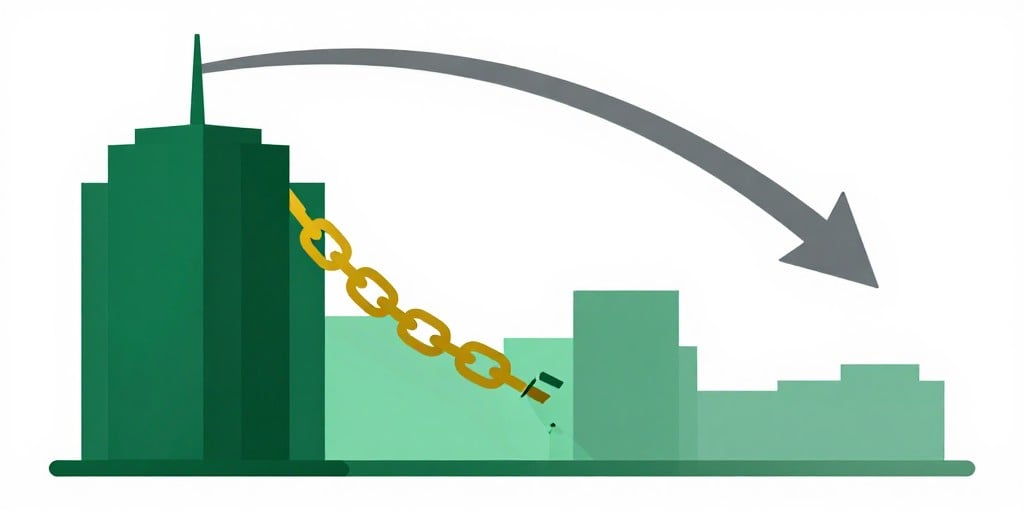
Margin compression is not a trivial footnote. It signals that the cost‑to‑revenue ratio is tightening, leaving Goldman Sachs with less cushion to absorb future shocks. In an industry already contending with regulatory headwinds and competitive frictions, a slimmer margin could erode the firm’s competitive edge and limit its capacity to invest in high‑growth initiatives.
Market Reaction: A Cautious Sell‑Off
The day of the earnings announcement saw GS shares dip by 0.62 %, trading at $884.81 per share. The decline, modest in isolation, is indicative of a broader market sentiment: investors are wary of the firm’s declining profitability trajectory. The stock’s simple moving average over the past 200 days sits at $959.58, underscoring that the current price is below a key technical benchmark. A further 8.71 % slide since the end of the last month reinforces a narrative of sustained pressure rather than a one‑off dip.
With a market capitalization of $266.8 bn and a current supply of 302.8 mn shares, the firm remains a heavyweight. Yet the fact that only $2.2 bn worth of shares traded in the last 24 hours suggests limited liquidity—a potential red flag for investors seeking quick entry or exit.
Contextualizing Within the Financial Sector
Goldman Sachs’ performance is not an isolated incident. Other major financial institutions exhibit a mixed bag of results in the past 24 hours:
- Morgan Stanley (MS) fell by 1.16 % to $180.40, with a market cap of $280.3 bn and a P/E of 14.35.
- Wells Fargo (WFC) dropped sharply by 2.47 % to $82.20, market cap $251.8 bn, P/E 11.75.
- Home Depot (HD) and RTX had negligible moves, reflecting a sectoral divide between consumer staples and industrial defense stocks.
In contrast, Netflix (NFLX) managed a –0.96 % decline despite reporting better‑than‑expected earnings, underscoring that even successful growth stories can falter when future revenue prospects are tempered.
Strategic Implications for Investors
- Margin Concerns: The narrowing margins raise questions about Goldman Sachs’ long‑term profitability, especially if pricing pressures persist or tax reforms tighten the fiscal environment.
- Valuation vs. Growth: At $884.81 per share and a 200‑day average of $959.58, the stock is trading below a critical support level. Coupled with a high market cap, the valuation appears stretched relative to its earnings trajectory.
- Liquidity and Volatility: Low trading volume could amplify volatility, making the stock a risky proposition for short‑term traders or those requiring swift liquidity.
- Sector Rotation: Investors might reconsider exposure to Goldman Sachs in favor of peers with stronger margin profiles or those benefiting from more favorable tax environments.
Bottom Line
Goldman Sachs’ recent earnings reveal a company at a crossroads: robust revenue growth juxtaposed against a concerning decline in operating profitability. The market’s modest sell‑off is a prudent response to a firm that, while still a titan, is showing the cracks that could widen under sustained pressure. Investors must weigh the allure of the firm’s scale against the stark reality of its shrinking margins—a calculation that will shape capital allocation decisions in the coming quarters.