Detailed Corporate Update on Hello Fresh (HFG.DE)
The German meal‑kit provider Hello Fresh SE (HFG.DE) closed the trading day on 23 November 2026 with a 4.08 % rally, reaching EUR 3.09 at 07:09 PM Central Europe. This modest uptick masks a deeper, systemic erosion that has been unfolding for months.
Market Snapshot
- Current share price: EUR 3.09
- Total shares outstanding: 159 million
- Market capitalisation: EUR 528.5 million
- Volume in last 24 h: EUR 5.4 million
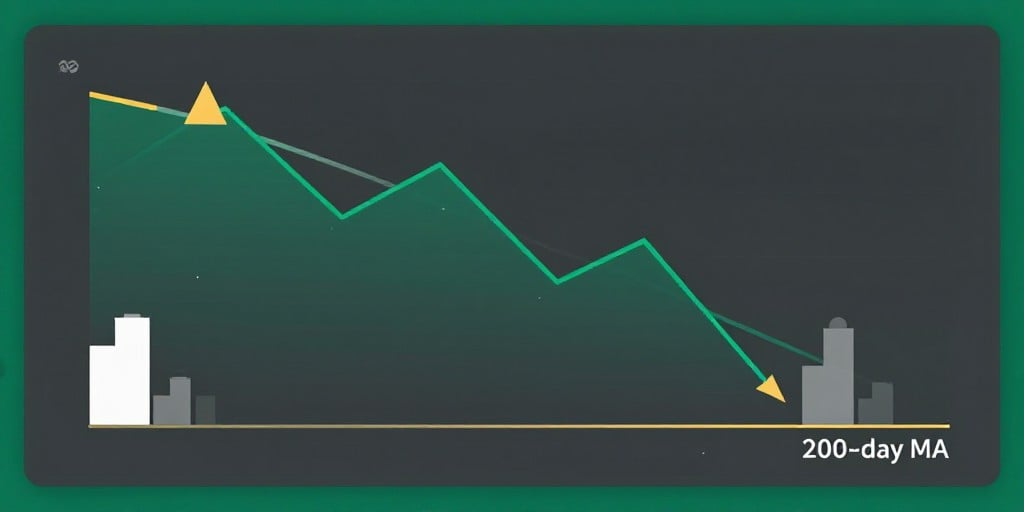
- 200‑day simple moving average: EUR 3.98
- 52‑week high: EUR 7.92 (29 Oct 2025)
- 52‑week low: EUR 2.16 (25 Sep 2026)
These figures expose a company trading below its recent historical mean, with a current price that sits just 0.11 € below the 200‑day SMA—a precarious position that invites volatility.
Regulatory and Operational Headwinds
A short‑selling disclosure in the German Federal Gazette reveals that a speculative entity holds a small portion of Hello Fresh’s shares. While the quantity is limited, the very presence of a short‑seller signals that institutional investors are beginning to doubt the company’s trajectory.
Concurrently, a market‑analysis outlet has highlighted persistent challenges:
- Cost‑cutting initiatives have failed to stem the tide of declining new‑customer acquisition.
- Order volumes continue to fall, eroding the revenue base that once justified Hello Fresh’s rapid expansion.
- The September earnings outlook was revised downward, a move that many now interpret as a harbinger of broader operational distress.
The convergence of a short‑seller’s stake and a bleak earnings outlook compels investors to reassess Hello Fresh’s prospects amid a shrinking revenue stream and intensified scrutiny from the market.
Comparative Performance of Related Stocks
| Ticker | 24‑hr Move | Current Price | Market Cap (mn €) | P/E Ratio |
|---|---|---|---|---|
| MUM.DE | +0.44 % | 34 | 631.9 | 17.18 |
| ADN1.DE | +6.75 % | 72.5 | 527.2 | 26.67 |
| IVU.DE | –0.37 % | 26.4 | 523.8 | 31.35 |
| SGL.DE | +3.81 % | 4.89 | 583.8 | – |
- Mensch Und Maschine Software (MUM.DE) has managed a modest gain, buoyed by a brief slowdown in its Autodesk‑related business offset by solid cash flow in its core software division. Management remains optimistic, yet the company’s cautious tone hints at underlying fragility.
- Adesso (ADN1.DE) demonstrates a sharper rally, driven by executive continuity and a strategic emphasis on AI‑enabled digital transformation. However, the company’s high P/E ratio suggests that the market is still pricing in future growth rather than current earnings stability.
- Ivu Traffic (IVU.DE) and Carbon (SGL.DE) provide a contrast: Ivu Traffic’s slight decline reflects sectoral pressures, whereas Carbon’s modest upside underscores the resilience of green‑energy supply chains, a sector less vulnerable to the consumer‑centric downturn affecting Hello Fresh.
Strategic Implications for Hello Fresh
- Customer Acquisition Lag – Despite aggressive marketing, the company’s churn rates remain high. The cost‑cutting measures have not translated into a measurable uptick in net new customers.
- Supply Chain Inefficiencies – Hello Fresh’s reliance on perishable goods exposes it to volatility in logistics costs, eroding margins.
- Capital Allocation – The revised earnings outlook indicates a potential need for further capital infusion, raising concerns about debt levels and dilution of existing shareholders.
In short, Hello Fresh’s recent price movement is a blip in an otherwise deteriorating trend. Investors must weigh the short‑seller’s confidence against the company’s deteriorating fundamentals and the broader macroeconomic pressures affecting discretionary spending.
Bottom Line
Hello Fresh’s 4.08 % gain on 23 November is a temporary reprieve rather than a signal of recovery. The convergence of regulatory disclosures, declining operational metrics, and a downward earnings revision paints a stark picture: the company is struggling to maintain its once‑dominant market position. Unless Hello Fresh can deliver a credible turnaround plan—addressing both customer acquisition and cost structure—its stock will likely remain vulnerable to further corrective action by the market and its speculative participants.