Hyundai Rotem’s Recent Trading Performance
Hyundai Rotem Co., Ltd. (064350.KS) experienced a decline of 3.5 % during the 24‑hour period that concluded at 10:49 PM Central European Time on Friday, 23 November 2026. At the close, one share of the company was quoted at approximately KRW 82,700 on the Korea Exchange. The stock remains one of the most actively traded listings on the market, with a trading volume of roughly KRW 37.3 billion in the preceding 24 hours and a supply of 113.1 million shares.
Market Capitalisation and Technical Indicators
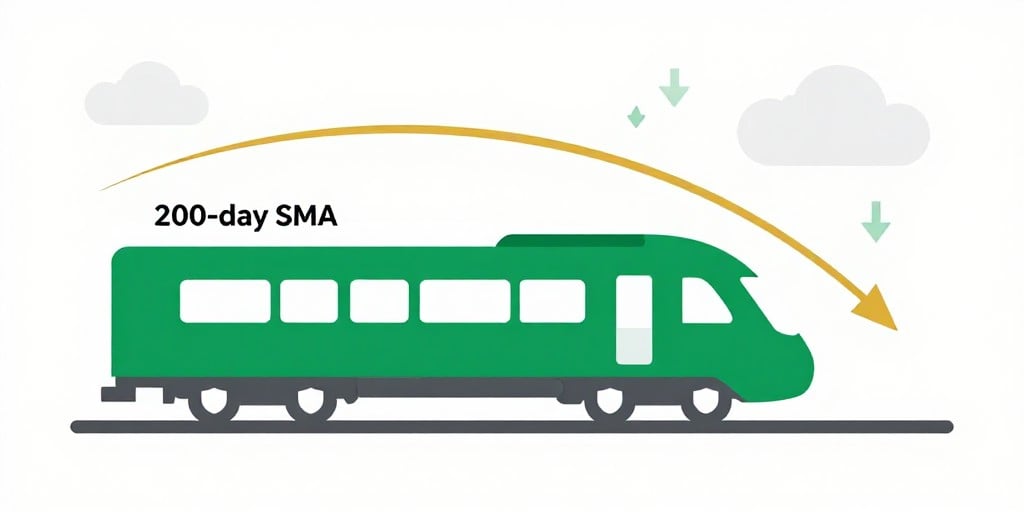
Hyundai Rotem’s market capitalisation currently stands at KRW 9.7 trillion. The price has shown a significant downward trend of 26.23 % since the end of the previous month, a decline that reflects broader market volatility and sector‑specific pressures. The 200‑day simple moving average is situated at KRW 180,374.5, providing a long‑term benchmark that the current price has already fallen well below. Over the past 52 weeks, the company’s highest closing price reached KRW 282,000 on 30 April 2026, while the lowest stood at KRW 84,800 on 22 October 2026.
Comparative Performance of Related Shares
The decline in Hyundai Rotem’s share price is mirrored by several peers in the aerospace and defense sector:
- Korea Aerospace Industries (047810.KS) – down 3.11 %, trading at KRW 102,200. Market capitalisation: KRW 10.7 trillion. P/E ratio: 71.69.
- HD Hyundai (267250.KS) – down 3.59 %, trading at KRW 137,800. Market capitalisation: KRW 10.4 trillion. P/E ratio: 5.38.
- Korean Air Lines (003490.KS) – down 2.94 %, trading at KRW 25,800. Market capitalisation: KRW 10.1 trillion.
- Lig Defence & Aerospace (079550.KS) – down 3.11 %, trading at KRW 46,003.27. Market capitalisation: KRW 10.9 trillion. P/E ratio: 53.99.
The synchronised downturn suggests that investors are responding to common macro‑economic signals, such as tightening credit conditions and uncertainties in defense procurement budgets.
Company Overview
Founded in 1977 and headquartered in Uiwang, South Korea, Hyundai Rotem Co., Ltd. has built a diversified portfolio that spans rail transportation, defense, and industrial infrastructure. The company’s rail division manufactures a wide array of vehicles—including electric multiple units, high‑speed trains, trams, diesel multiple units, locomotives, passenger coaches, and freight wagons—as well as the associated systems for signalling, communication, and power. In the defense arena, Hyundai Rotem produces main battle tanks, family vehicles, wheeled combat vehicles, mock‑training equipment, and emerging weapon systems. The company also offers comprehensive engineering, procurement, installation, and commissioning services for heavy industry projects such as steel mills, automotive plants, power stations, and environmental facilities.
Hyundai Rotem’s global reach is underscored by its presence in both domestic and international markets, with a robust order book that spans continents. Its diversified product mix and extensive service portfolio position the company to navigate cyclical downturns, although the current market sentiment reflects broader challenges faced by the industry.
Outlook
Investors monitoring Hyundai Rotem will likely focus on the company’s ability to sustain revenue streams amid the recent decline in share price and the sector‑wide sell‑off. Analysts will also scrutinise upcoming contract awards, particularly in the high‑speed rail and defense sectors, to gauge whether the company can recover the momentum it once enjoyed. As the market stabilises, Hyundai Rotem’s resilience will be tested by its capacity to innovate and secure long‑term contracts in an increasingly competitive landscape.