Iradimed (IRMD) Slips Slightly Amid Mixed Market Signals
Iradimed’s shares declined 0.49 % over the last 24 hours, closing at USD 87.81 at 10:03 AM Central Europe on Thursday, 22 October 2026. The stock’s current supply sits at 12.8 million shares, giving the company a market capitalization of USD 1.1 billion. In the past day, the company saw USD 5.8 million worth of shares change hands—an amount that underscores the limited liquidity and the cautious stance investors are taking.
The stock’s trajectory has not been particularly smooth. While it has gained 1.5 % since the end of last month, its 200‑day simple moving average—USD 93.07—remains above its current price, signalling that the market is still viewing the shares as overvalued. The 52‑week high of USD 107.90 on 02 October 2026 and the 52‑week low of USD 75.75 on 10 October 2025 illustrate a volatility range that may tempt risk‑seeking traders but will keep many wary of a sudden reversal.
The Competitive Landscape in the 24‑Hour Window
Iradimed’s performance must be weighed against a cohort of peers that have shown divergent movements:
| Stock | Ticker | 24‑h change | Current Price (USD) | Market Cap (USD) |
|---|---|---|---|---|
| Universal Insurance | UVE | –0.33 % | 47.73 | 1.3 billion |
| Nektar Therapeutics | NKTR | –2.42 % | 38.27 | 1.3 billion |
| Taysha Gene Therapies | TSHA | +0.24 % | 4.12 | 1.3 billion |
| Uniti | UNIT | –2.90 % | 5.35 | 1.3 billion |
| Rex American | REX | +0.67 % | 40.80 | 1.3 billion |
While Universal Insurance and Nektar Therapeutics have weakened, Taysha Gene Therapies and Rex American have gained modest ground. Uniti’s sharp decline is particularly notable, echoing the broader skepticism that surrounds companies with low price‑to‑earnings ratios. Iradimed’s 0.49 % dip is relatively muted, suggesting that investors are not yet ready to abandon the stock en masse.
What Drives Iradimed’s Valuation?
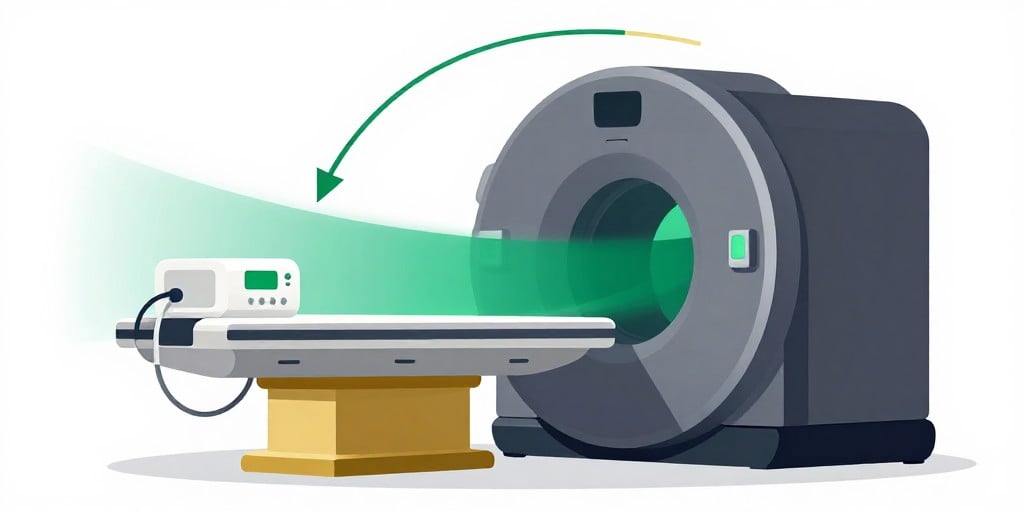
Iradimed’s niche product line—non‑magnetic intravenous infusion pump systems for use during magnetic resonance imaging—positions the company at the intersection of healthcare technology and patient safety. The firm’s headquarters in Winter Springs, Florida, and its focus on a specialized market segment may provide a moat against generic competitors. However, the company’s reliance on a narrow product range exposes it to supply‑chain risks and potential regulatory shifts in MRI practices.
Analysts will likely scrutinize the company’s recent earnings reports, which have yet to be disclosed. In the absence of robust financial metrics, the stock’s valuation rests heavily on market sentiment and the broader perception of the medical‑equipment sector. Given that the industry is currently under pressure from cost‑control initiatives and heightened competition, Iradimed’s modest upside may be perceived as incremental rather than transformative.
Strategic Implications for Investors
Investors eyeing Iradimed must ask whether the company’s current valuation—trailing the 200‑day moving average and flirting with its 52‑week low—justifies a short‑term bet. The following points should inform the decision:
- Liquidity Concerns – With only USD 5.8 million of trading volume in 24 hours, large orders could easily move the price.
- Competitive Pressure – The company competes with firms that have broader product portfolios and deeper pockets.
- Regulatory Uncertainty – MRI safety protocols are evolving; any shift could either boost demand or render the technology obsolete.
- Profitability Metrics – Without clear earnings data, the stock’s price‑to‑earnings ratio remains uncommitted, leaving investors exposed to price swings that are not justified by fundamentals.
Bottom Line
Iradimed’s slight decline is a symptom of a broader cautious stance among investors who are wary of overvalued healthcare tech stocks. While the company’s niche market offers potential upside, its current valuation—below the 200‑day moving average and close to a 52‑week low—suggests that the market has not yet embraced the promise of its specialized MRI infusion pumps. Until the firm can deliver stronger earnings or broaden its product base, the stock’s modest gains will likely remain incremental, and its future trajectory will hinge on both market perception and the company’s ability to navigate an increasingly competitive landscape.