Bajaj Finance Faces a Stark Test of Resilience
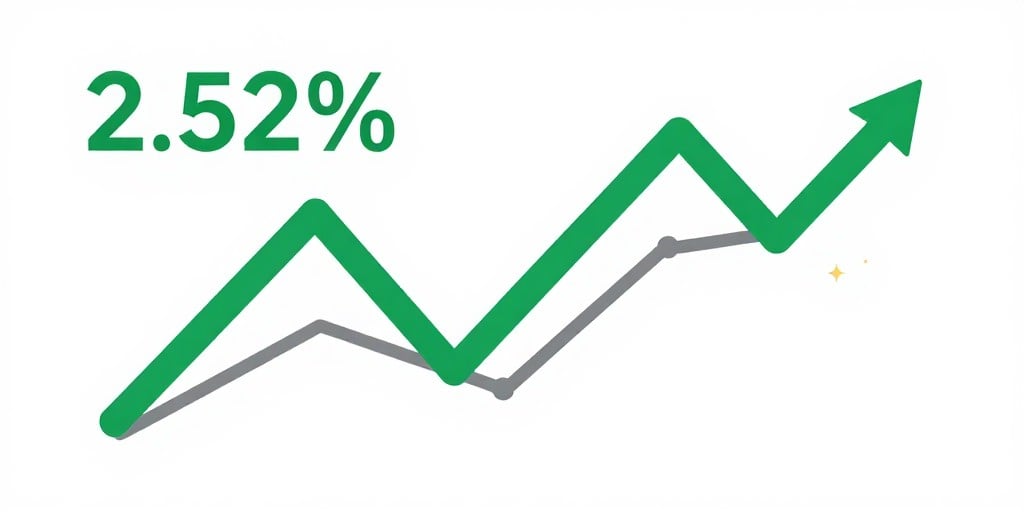
Bajaj Finance Ltd. (BAJFINANCE.NS) has slipped 2.52 % in the last 24 hours, closing at INR 926 amid a broader sell‑off that has seen the stock trade -6.26 % since the end of last month. With a market capitalization of INR 6.1 trillion, the company’s shares now trade at a price‑to‑earnings ratio that reflects investor anxiety over its rising non‑performing asset (NPA) profile.
Financials in the Balance Sheet
The company reported a robust September‑quarter performance, with profits and interest income rising by roughly 25 % and 15 % respectively. Its asset‑under‑management base expanded by mid‑20 %, prompting an upward revision of FY27 guidance. Yet, the gross NPAs edged higher—a development that management insists is a prudent step to bolster resilience rather than a sign of distress.
Despite this, the market reacted sharply. Shares fell about 3 % in early trade, a dip that was only partially recovered as the broader market advanced. The decline reflects the market’s growing unease that higher NPAs could erode profitability in a tightening credit environment.
Technical Pain Points
Bajaj Finance’s 200‑day simple moving average sits at INR 974.8, below the current trading price, indicating a potential trend reversal. The 52‑week high of INR 1,176.4 (recorded on 08/03/2026) and the 52‑week low of INR 787.9 (03/23/2026) underscore the volatility that has plagued the company’s valuation. With a supply of 6.2 billion shares and INR 8 billion worth of shares traded in the last 24 hours, the liquidity profile remains robust, yet the price pressure persists.
Broader Market Context
Bajaj Finance is not alone in experiencing a downturn. Hindustan Unilever and Adani Power saw modest declines, while Kotak Mahindra Bank and Titan also slipped, underscoring a sector‑wide hesitation toward Indian financial and consumer stocks. In contrast, Larsen & Toubro gained 0.96 %, buoyed by government contracts that reaffirm its dominance in large‑scale infrastructure projects.
Critical Assessment
Credit Quality vs. Provisions: While the company’s credit quality remains “acceptable,” the increase in loan‑loss provisions could signal that the bank is preparing for a tougher credit climate. Investors must question whether this is a pre‑emptive safeguard or an admission of looming default risk.
Guidance Revision: The upward revision of FY27 guidance is a double‑edged sword. It signals confidence, yet also raises expectations that the company may have to deliver higher growth in a market that is already tightening.
Stock Valuation: Trading at INR 926 with a 200‑day SMA at INR 974.8 suggests the stock is undervalued relative to its recent performance, but the recent -6.26 % swing since month‑end calls into question whether the market will allow a rebound without further structural improvements.
Investor Sentiment: The sharp decline in early trade, followed by a modest recovery, indicates that market participants are waiting for clearer signals regarding the company’s asset quality and future profitability.
Bottom Line
Bajaj Finance’s recent performance paints a picture of a company that is performing well on the surface but is hollowed out by rising NPAs and a tightening credit environment. The stock’s decline in the last 24 hours is a warning sign: investors are demanding more than just headline growth—they want tangible evidence that the company can weather the storm without compromising its financial health.
In a market that increasingly rewards transparency and resilience, Bajaj Finance must prove that its upward guidance and robust asset growth are not merely optimistic projections but are underpinned by solid credit quality and prudent risk management. Until then, the stock’s trajectory will likely remain volatile, and its valuation may continue to be a point of contention for both brokers and retail investors alike.