Kolon Industries Sinks as Market Skepticism Deepens
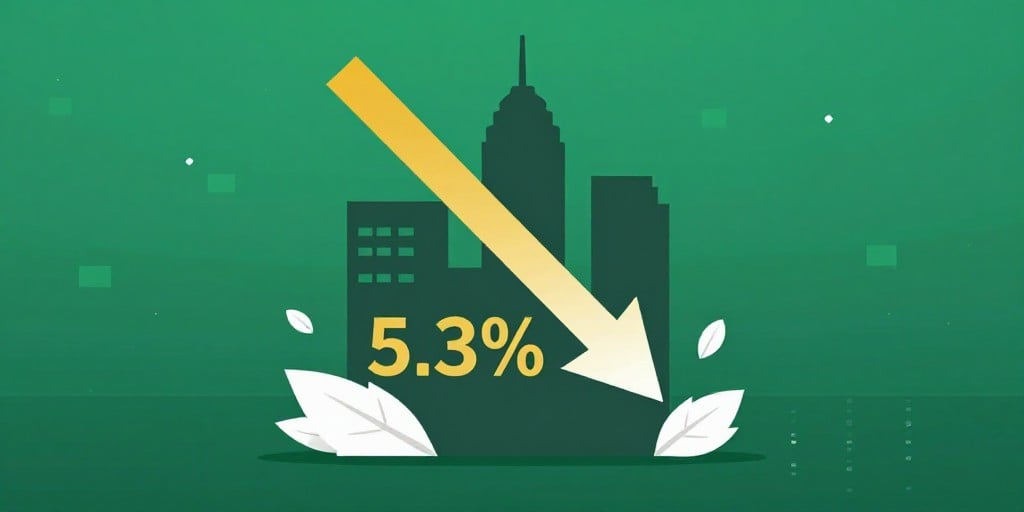
The Seoul‑based conglomerate, listed under ticker 120110.KS, closed the trading day at KRW 43,550—a decline of 1.51 % from the previous close. With 31.9 million shares still circulating, the firm’s market capitalisation now sits at KRW 1.5 trillion, down sharply from the KRW 1.7 trillion level it boasted just a month ago. The most recent 24‑hour volume of approximately KRW 8.5 billion underscores a muted appetite among investors, who appear increasingly wary of Kolon’s expansive product mix.
A Tale of Declining Momentum
Kolon’s performance has deteriorated dramatically: a 17.03 % drop since the end of the last month signals a persistent slide. Even its 200‑day simple moving average, a key technical indicator for many traders, stands at KRW 62,863—well above today’s trading level, implying a bearish bias. The company’s highest point in the past 52 weeks was KRW 104,900 (late April 2026), while its lowest was KRW 33,900 (early November 2025). The current price is still 47 % lower than its peak, suggesting that investors may be re‑evaluating the firm’s valuation in light of its diversified yet diluted revenue streams.
Comparisons with Peer Performance
In the same 24‑hour window, other Korean equities painted a mixed picture:
- Lotte (004990.KS): down 0.67 % at KRW 21,950, market cap KRW 1.7 trillion.
- Lx (001120.KS): down 2.24 % at KRW 43,350, market cap KRW 1.6 trillion, P/E 13.27.
- Kumho Tire (073240.KS): up 1.1 % at KRW 5,420, market cap KRW 1.6 trillion, P/E 4.01.
- Poongsan (103140.KS): down 0.65 % at KRW 60,600, market cap KRW 1.7 trillion, P/E 8.88.
Kolon’s decline outpaces its peers, indicating a specific erosion of confidence rather than a broader sectoral downturn. While Kumho Tire enjoys a modest rally, Kolon’s multi‑industry footprint appears to be a double‑edged sword, diluting focus and stretching resources thin.
The “Jack of All Trades” Conundrum
Kolon Industries has built an impressive catalogue: from industrial polymers such as polyester and nylon tire cords, to high‑tech materials for optics, electronics, and solar devices, to a vast array of fashion brands ranging from Marc Jacobs to Jack Nicklaus. The company’s product pipeline includes:
- Polymer materials: polyester, nylon, technical yarn, artificial leather, non‑woven fabrics (FINON brand).
- Advanced coatings and membranes: aromatic amide (Heracron), Cleanfil‑S (water treatment), Ecomate‑H (fuel‑cell humidifier).
- Resins: hydrocarbon, phenolic (HiRENOL), epoxy (HiROXY), polyurethane.
- Industrial plastics: glass‑reinforced plastic pipes, manholes.
- Fashion: outdoor and sportswear (KOLON SPORT), luxury labels (Marc Jacobs, LOEWE), casual wear (Customellow, Cambridge Members), leather goods (COURONNE), footwear (SUECOMMA BONNIE).
Such diversification can be a strategic shield against market volatility, yet the recent price trajectory suggests that investors perceive it as a liability—an unfocused conglomerate unable to prioritize growth drivers effectively.
Why the Market is Unsettled
Several factors may explain the current disquiet:
- Erosion of Margins: The polymer and textile sectors have faced intense price pressure from cheaper imports. Kolon’s ability to maintain margin in an industry with low switching costs is increasingly doubtful.
- Capital Allocation Concerns: The breadth of the business raises questions about whether capital is being invested in high‑return projects or merely sustaining legacy operations.
- Valuation Sensitivity: With a 200‑day SMA significantly above the current price, technical traders may be triggering stop‑losses, further accelerating the sell‑off.
- Competitive Landscape: In the fashion segment, Kolon competes with both domestic powerhouses and global giants. Without a clear differentiation strategy, brand equity could dilute.
Outlook and Investor Guidance
For shareholders and potential investors, the present scenario presents a stark choice: either see Kolon as a value play—anticipating a rebound as the company refocuses on core profitable segments—or as a risk‑laden conglomerate whose sprawling operations dilute returns. Analysts will watch closely for any signals of strategic realignment, such as divestiture of non‑core assets or targeted capital injections into high‑growth technologies.
Until then, the market appears to treat Kolon Industries as a cautionary tale of diversification gone awry—a reminder that breadth without depth can erode shareholder value.