Orvana Minerals Faces a Staggering Decline: A Wake‑Up Call for Investors
Orvana Minerals (ORV.TO) has shed almost four percent of its value in a single trading session, closing at CAD 1.78 after a 24‑hour dip of ‑3.98 %. The company’s market capitalization now sits at a paltry CAD 276 million, a figure that belies its ambitious portfolio of gold‑and‑copper projects. Over the past month alone, Orvana’s share price has collapsed by ‑30.58 %, a trajectory that signals deeper systemic issues than a simple market correction.
A Troubled Trajectory
The simple moving average of the last 200 days is CAD 1.99, indicating that the current price is already below its 200‑day trendline—a classic warning sign of a weakening trend. Even the most recent peak of CAD 2.93 on 3 September 2026 appears more a relic of a speculative bubble than a sustainable valuation anchor. The 52‑week low of CAD 1.18 on 6 November 2025 underscores the volatility that investors cannot ignore.
Despite a current supply of 136.6 million shares, the daily trading volume remains abysmally low. In the last 24 hours, only CAD 227.9 k worth of Orvana stock changed hands, a volume that is negligible when compared with peers in the sector. Such thin liquidity magnifies price swings and offers little room for strategic entry or exit without triggering further volatility.
The Broader Context: How Peer Stocks Are Performing
- Acadian Timber (ADN.TO): A marginal +0.23 % gain to CAD 17.05, backed by a healthy market cap of CAD 320.4 million and a modest P/E of 6.64.
- Spectral Medical (EDT.TO): Slightly down ‑0.91 % at CAD 1.08; market cap of CAD 320 million.
- Exco (XTC.TO): Down ‑0.69 % to CAD 8.45; market cap of CAD 322.9 million; P/E of 13.54.
- Tudor Gold (TUD.V): Down ‑2.5 % to CAD 0.74; market cap of CAD 325.7 million.
- Cerrado Gold (CERT.V): Slightly up +0.43 % to CAD 2.19; market cap of CAD 325.5 million; P/E of 62.62.
In a market where some peers maintain solid valuation multiples and modest gains, Orvana’s steep decline raises questions about its operational efficacy and investor confidence. The company’s ability to sustain investor interest appears waning, especially when juxtaposed against the relative stability of its competitors.
What’s Really Happening at Orvana?
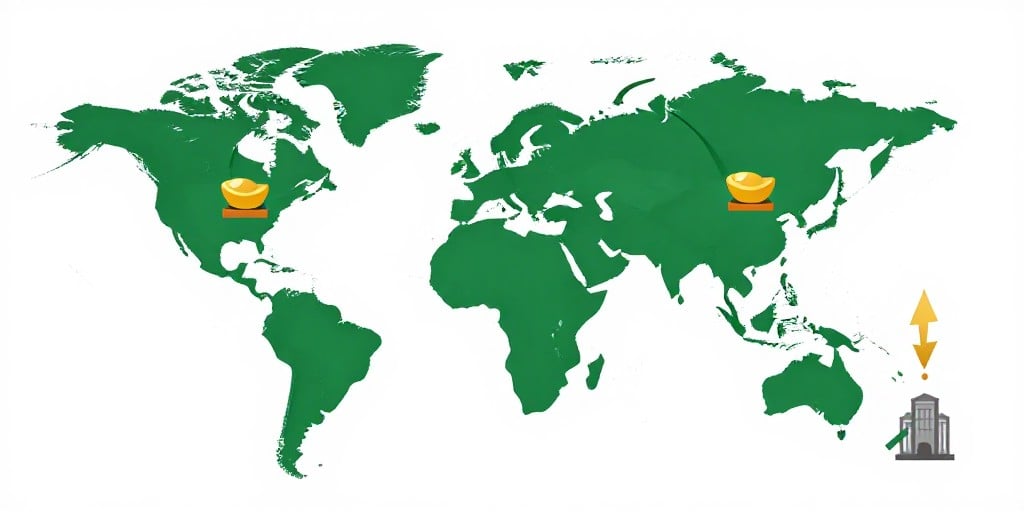
Orvana Minerals Corporation, headquartered in Toronto, boasts three flagship projects: the El Valle‑Boinas/Carles gold‑copper venture in northern Spain, the Don Mario Mine in eastern Bolivia, and the Copperwood copper project in Michigan’s Upper Peninsula. While the geographic spread ostensibly diversifies risk, the lack of substantive progress reports, coupled with dwindling share prices, suggests that exploration is not translating into actionable production or revenue streams.
The company’s website, www.orvana.com , provides limited transparency on drilling results or fiscal commitments. Without clear milestones, the market remains skeptical, and the current valuation reflects that uncertainty.
The Bottom Line
Orvana Minerals’ precipitous decline is not merely a temporary fluctuation; it is a symptom of deeper operational and financial malaise. Investors must weigh the potential upside—if the projects ever materialise—against the stark reality of a company whose market cap, liquidity, and price trajectory are all in a state of distress. In a sector that rewards proven reserves and transparent progress, Orvana’s current trajectory suggests a need for drastic strategic reevaluation or, alternatively, a cautious exit for those who cannot afford further erosion of capital.