Ryanair Holdings PLC: Navigating Volatility with Strategic Price Adjustments
Ryanair Holdings PLC, the low‑cost leader in the European aviation market, closed the trading session on Friday, 23 November 2026, at EUR 22.53, up 0.94 % from the previous close. With a market capitalization of EUR 23.8 billion and a 24‑hour trading volume of EUR 33.5 million, the stock remains a bellwether for the broader airline sector.
Current Technical Landscape
| Metric | Value |
|---|---|
| Simple Moving Average (200 days) | EUR 25.08 |
| 52‑Week High | EUR 30.15 (15 December 2025) |
| 52‑Week Low | EUR 21.12 (18 May 2026) |
| Price‑to‑Earnings Ratio | 9.4 (implied) |
| Dividend Yield | 0.0 % |
The stock’s proximity to the 200‑day moving average suggests that the current rally is still within a broader consolidation phase, with potential upside if the airline’s pricing strategy materializes as projected.
Strategic Context: Rising Costs, Rising Fares
Ryanair faces a dual‑pressure environment:
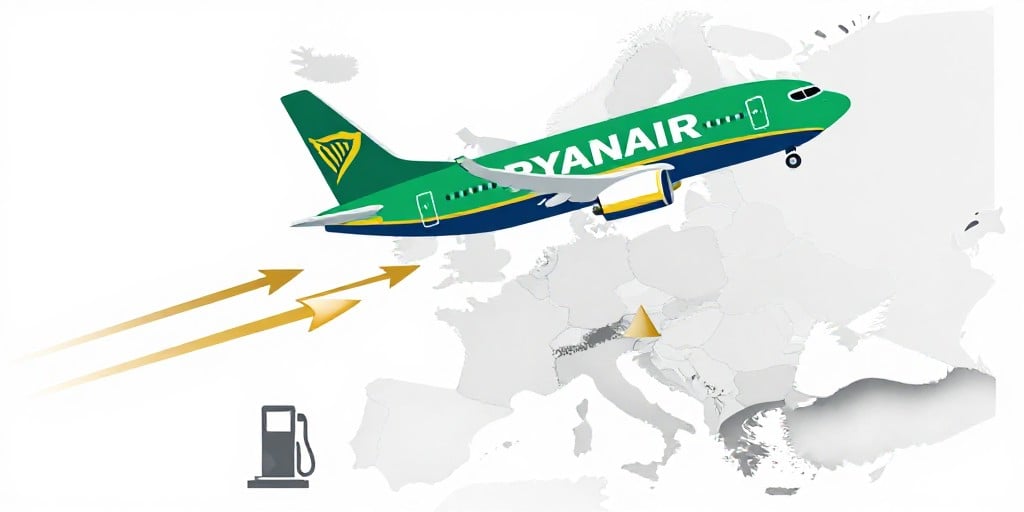
- Fuel Cost Inflation – Global fuel prices have surged, eroding margins across the industry. Ryanair has indicated that it will adjust fares to reflect these cost pressures, potentially leading to significant ticket price increases over the next 12 months.
- Geopolitical Uncertainty – Ongoing geopolitical tensions in Europe and the Middle East have introduced volatility in travel demand and route profitability.
The airline’s response mirrors that of peers such as Wizz Air, which has offered voluntary buyouts to some pilots to control labor costs. Ryanair’s focus remains on maintaining financial sustainability while preserving its competitive advantage through disciplined cost management and capacity alignment.
Operational Adjustments and Capacity Management
- Capacity‑Demand Matching – Ryanair is realigning aircraft deployment to match projected demand, reducing overcapacity without compromising network reach.
- Cost‑Efficiency Initiatives – The company continues to streamline operations, including fuel hedging strategies and ancillary revenue optimization.
These measures position Ryanair to absorb the impact of higher fuel expenses while sustaining its low‑fare proposition.
Market Sentiment and Peer Performance
In the past 24 hours, several related stocks have shown varied performance, reflecting broader market sentiment toward the aviation and ancillary sectors:
- Aercap – Down 0.13 % at USD 145.77, market cap USD 22.1 bn.
- Aib – Up 2.25 % at EUR 10.81, market cap EUR 24.9 bn.
- Jazz Pharmaceuticals – Up 1.26 % at USD 213.44, market cap USD 13.8 bn, with a recent clinical breakthrough in HER2‑positive gastro‑esophageal adenocarcinoma.
- Kerry Group – Down 0.63 % at EUR 99.1, market cap EUR 16.1 bn, announcing a new share‑buyback programme.
- Kingspan Group – Up 1.01 % at EUR 89.35, market cap EUR 18.9 bn, reaffirming its fiscal outlook.
The relative strength of Aib and Jazz, coupled with Ryanair’s current price trajectory, suggests a sectoral tilt toward companies with robust growth prospects or strategic advantages.
Forward Outlook
Analysts project that Ryanair’s fare‑adjustment strategy will yield incremental revenue growth over the next 12 months, offsetting fuel‑related cost increases. The airline’s disciplined cost structure and high load factor forecast a margin improvement of 1–2 percentage points once the fare adjustments take hold.
Investors should monitor:
- Fuel Hedge Effectiveness – The extent to which Ryanair’s hedging mitigates cost volatility.
- Demand Recovery in Key Markets – Particularly the UK and mainland Europe, where travel restrictions have eased.
- Competitive Pricing Dynamics – How rivals’ fare strategies influence Ryanair’s market share.
Conclusion
Ryanair Holdings PLC is executing a prudent, data‑driven response to the twin challenges of fuel inflation and geopolitical risk. By tightening capacity, enhancing cost controls, and strategically adjusting fares, the company is positioned to sustain its market leadership and deliver shareholder value in an uncertain environment.