Corporate Pulse: Scynexis and Its Contemporaries
Scynexis (SCYX) closed its most recent trading session at USD 3.81, a modest 0.66 % rise on Friday, 23 Oct 2026. Yet the figure alone masks a deeper malaise: the shares have slid 17.8 % from their last‑month benchmark, and the company’s market capitalisation now sits at a paltry USD 37.9 million. With only 9.9 million shares outstanding, liquidity is thin and volatility remains high. The last 24 hours saw a turnover of merely USD 148.6 k, a negligible fraction of the volume that would justify a robust market presence.
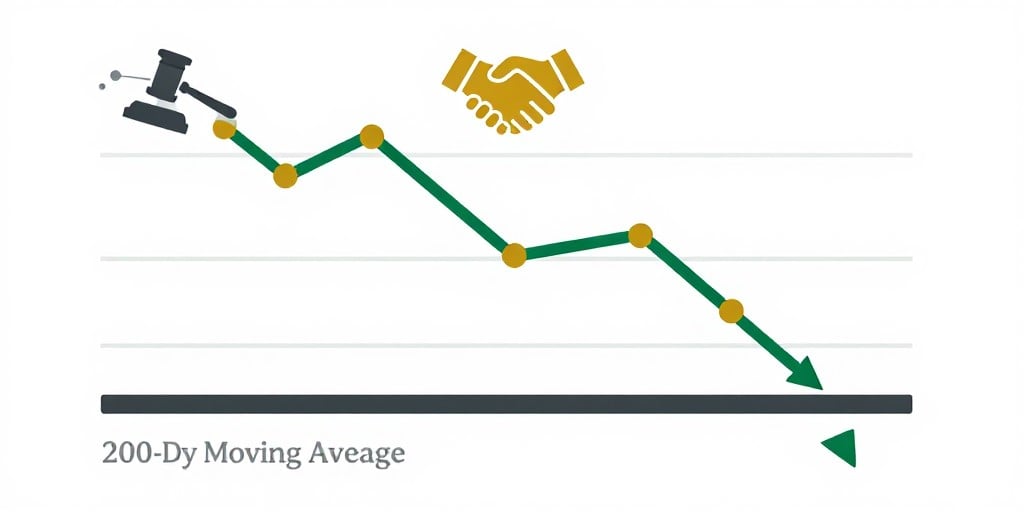
The technical backdrop is equally bleak. A 200‑day simple moving average at USD 5.59 sits well above the current price, suggesting that short‑term momentum is insufficient to lift the stock beyond its recent lows. The 52‑week high of USD 9.12—reached on 17 April—remains a distant memory, while the 52‑week low of USD 3.53 on 28 July indicates a persistent downward pressure on the share price.
Comparative Market Performance
The broader sector is not immune to the downturn. Several peers have recorded significant declines in the past 24 hours:
- Marwynn (MWYN): down 16.67 % to USD 2.23, market cap USD 45.4 million.
- Arb Iot (ARBB): down 3.11 % to USD 4.27, market cap USD 44.4 million.
- Rekor (REKR): down 4.59 % to USD 0.31, market cap USD 45.1 million.
Only two companies have posted gains:
- Inmune Bio (INMB): up 0.63 % to USD 1.54, market cap USD 44.7 million. The firm has announced a partnership with Uniphar for its investigational cell therapy, Ebstrocel, and a regulatory shift toward a full UK marketing application in early 2027. While the news signals a move toward commercial readiness, it remains uncertain whether regulatory approval will materialize.
- Serina Therapeutics (SER): up 6.63 % to USD 1.76, market cap USD 44.7 million. The company’s recent proposal to issue over 8 million share‑based options to employees and directors—without an exercise price and tied to performance milestones—illustrates a strategy that prioritises equity over cash outlay, yet the impact on shareholder value is ambiguous.
Why Scynexis Stumbles
Scynexis operates in a niche yet highly competitive market: intravenous antifungal therapies for invasive fungal infections. Despite its specialized focus, the company has struggled to translate clinical milestones into market traction. The current valuation of USD 3.81 per share is far below the cost of many competing therapies, suggesting that investors view SCYX as a speculative play rather than a reliable revenue generator.
The company’s thin trading volume underscores a lack of confidence among market participants. Even a modest price increase of 0.66 % does little to alter the perception that Scynexis is a high‑risk, low‑reward entity. Analysts point to the need for a robust pipeline, diversified product line, and stronger commercial partnerships as prerequisites for a meaningful turnaround.
Outlook
Scynexis faces an uphill battle. Unless the company can accelerate product development, secure strategic partnerships, and improve liquidity, the share price is likely to remain trapped beneath its 200‑day moving average. The broader sector’s mixed performance hints at systemic challenges in biotech, where high R&D costs and regulatory hurdles often outweigh short‑term profitability.
Investors should proceed with caution, keeping a close eye on forthcoming regulatory filings and partnership announcements that could shift the narrative from speculative to substantive. In the meantime, Scynexis and its peers remain a stark reminder that a promising concept does not guarantee market success.