Market Reaction to Serabi Gold’s 24‑Hour Decline
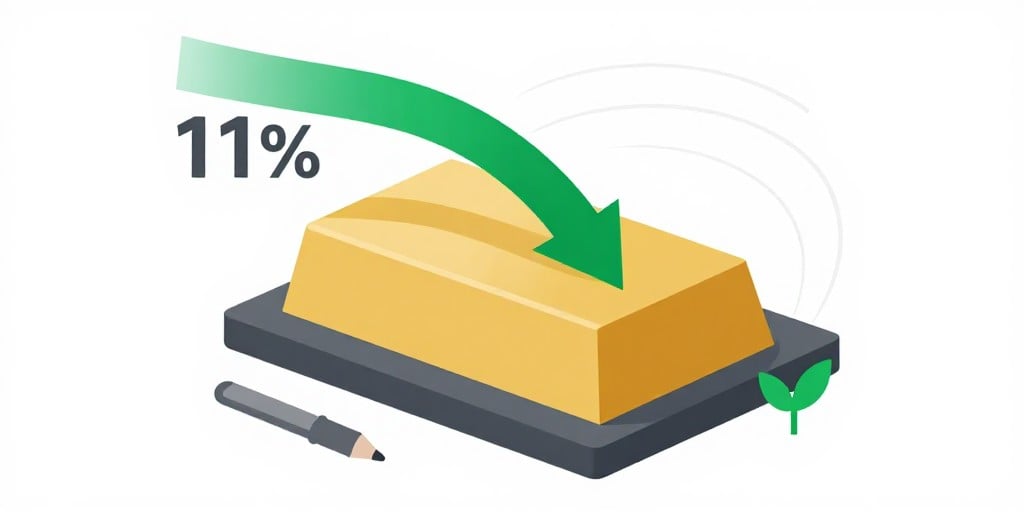
Serabi Gold PLC (B9O2.F) experienced a sharp downturn in the last 24 hours, falling 11.11 % as of 03:30 AM Central Europe on Friday, 23 September 2026. The share price currently trades at approximately GBX 184 on major exchanges, a level that reflects the company’s broader slide of 19.52 % since the end of last month. With a circulating supply of 76.3 million shares, Serabi Gold’s market capitalisation sits at GBX 20.4 billion.
Trading Volume and Market Context
In the most recent 24‑hour period, roughly GBX 300.1 million worth of Serabi Gold shares were traded. This volume indicates a robust liquidity level despite the price decline. The simple moving average over the past 200 days is GBX 303.62, suggesting that the current price sits well below its long‑term average. Historically, the stock’s peak over the past 52 weeks reached GBX 375 on 26 January 2026, while the lowest point was GBX 170 on 21 October 2026. These benchmarks underline the volatility that has characterized Serabi Gold’s recent trading activity.
Comparative Performance of Peer Companies
The decline in Serabi Gold’s valuation occurs against a backdrop of mixed performance among its peers:
| Company | Ticker | 24‑Hour Movement | Current Price | Market Cap | P/E Ratio |
|---|---|---|---|---|---|
| Hybrid Software | HYSG.BR | Flat (0 %) | EUR 3.7 | EUR 127.3 m | 55.85 |
| Associated British Foods | ABF.L | Down 0.67 % | GBX 1,932 | GBX 18.1 bn | 14.5 |
| Informa | INF.L | Down 1.02 % | GBX 849.4 | GBX 15.5 bn | 49.92 |
| Halma | HLMA.L | Up 1.5 % | GBX 3,280 | GBX 16.9 bn | 34.02 |
| Legal & General | LGEN.L | Up 0.67 % | GBX 298.2 | GBX 21.5 bn | 26.28 |
While Serabi Gold’s decline is noticeable, the broader sector shows resilience, with several peers maintaining or improving their valuation metrics. The performance of Halma and Legal & General, in particular, suggests that investor sentiment remains cautiously optimistic in related industrial and financial services segments.
Company Profile
Serabi Gold PLC operates within the materials sector, focusing primarily on metals and mining activities. Its flagship asset is the Palito Gold Mine, situated in Brazil’s Tapajos region of northern Brazil. The company’s operational strategy centres on extracting gold from this mine, and its financial performance is closely tied to the commodity’s global price movements and the mine’s productivity.
Implications for Investors
The recent price drop may attract value‑oriented investors looking for opportunities in a company whose valuation has fallen below both its long‑term moving average and its 52‑week low. However, potential investors should weigh the company’s exposure to commodity price volatility, operational risks in the Tapajos region, and the broader macroeconomic environment affecting the metals sector.
Outlook
Analysts will be monitoring Serabi Gold’s subsequent trading sessions to determine whether the stock stabilises near its 200‑day moving average or continues a downward trend. Additionally, the company’s management will likely address investor concerns by outlining any new initiatives or cost‑control measures intended to reverse the recent decline.