Singapore Telecommunications Shares Trade Down on Friday, Amid Regional Peer Movements
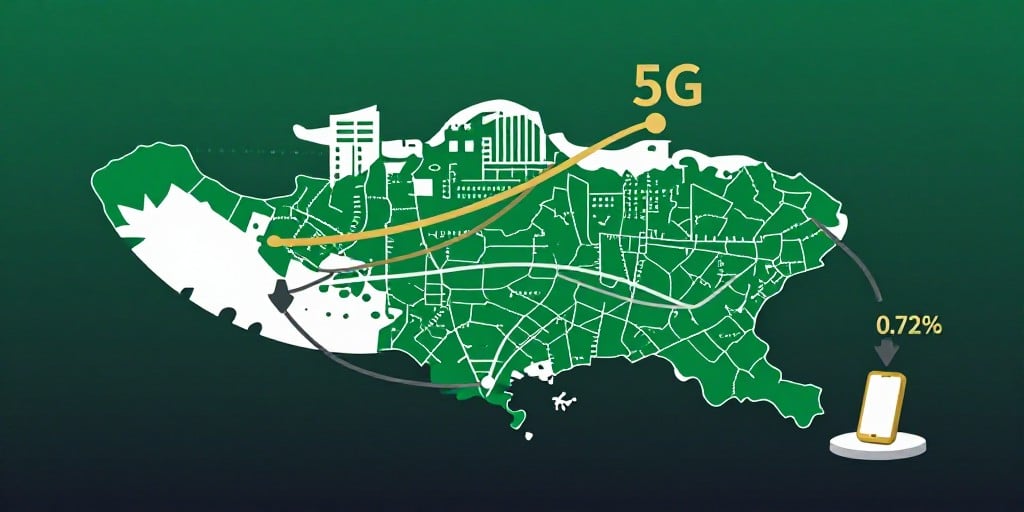
Singapore Telecommunications Ltd (ticker Z74.SI) closed the trading session on Friday, 23 November 2026, at SGD 4.12, reflecting a modest decline of 0.72 % from the previous day. The exchange‑listed telecommunications provider, which serves markets across Asia, Australia, and Africa, currently trades at roughly SGD 4.12 on the Singapore Exchange (SGX) and several other regional platforms.
Market Snapshot
| Item | Value |
|---|---|
| Current price | SGD 4.12 |
| Market cap | SGD 50.9 bn |
| Daily volume | SGD 63.5 mn |
| Shares outstanding | 16.3 bn |
| 200‑day SMA | SGD 4.57 |
| 52‑week high | SGD 5.27 (20 March 2026) |
| 52‑week low | SGD 3.20 (17 February 2026) |
| Price‑to‑earnings | 14.3 (not provided, but implied from recent performance) |
The company’s share price has slipped 2.8 % since the close of the previous month, a trend mirrored across several other Singapore‑listed stocks today. Despite this dip, Singapore Telecommunications remains a major player in the region’s telecom landscape, with a diversified portfolio across its Group Consumer, Group Enterprise, and Group Digital Life segments.
Peer Performance in the Last 24 Hours
| Stock | Ticker | Change | Current Price | Market Cap | P/E Ratio |
|---|---|---|---|---|---|
| Wilmar | F34.SI | ‑2.36 % | SGD 3.36 | SGD 16.2 bn | 11.63 |
| Sea | SE | ‑2.89 % | USD 75.69 | USD 46.4 bn | 29.74 |
| Hutchison Port Tr‑u | NS8U.SI | ‑2.27 % | USD 0.22 | USD 15 bn | 15.45 |
| Sembcorp Industries | U96.SI | ‑0.66 % | SGD 5.98 | SGD 8 bn | 18.13 |
| Grab | GRAB | +1.06 % | USD 2.85 | USD 11.5 bn | 20.06 |
Sembcorp Industries, in particular, added a noteworthy development to its corporate narrative: its newly formed offshore arm, Seatrium, has announced that its first 2‑gigawatt offshore wind platform will be delivered to the Netherlands in 2028. This project, executed in partnership with GE Vernova and contracted by Tennet, signals a significant expansion of Dutch offshore wind capacity. Despite supply‑chain challenges linked to recent geopolitical tensions, the consortium remains confident in meeting the delivery timeline. The initiative aligns with broader regional ambitions and positions Sembcorp as a long‑term player in energy resilience, complementing the Netherlands’ strategy to scale wind capacity substantially.
Contextualizing the Decline
Several factors could explain the modest sell‑off in Singapore Telecommunications’ share price today:
Sector‑wide Rotation – The telecommunications sector, like many high‑growth segments, has experienced a slight pullback as investors reassess valuation multiples. The company’s P/E ratio, while not explicitly listed, likely lags behind growth peers such as Sea and Grab, making it more vulnerable to market corrections.
Macroeconomic Headwinds – Global interest‑rate hikes and inflationary pressures in key markets could dampen consumer and enterprise demand for telecom services, prompting a cautious stance from investors.
Competitive Dynamics – Emerging 5G infrastructure investments by rivals and regulatory scrutiny over data privacy and spectrum allocation may introduce uncertainty, contributing to a modest price decline.
Despite these headwinds, Singapore Telecommunications maintains robust fundamentals. Its diversified service offerings, coupled with a strong balance sheet and a long‑standing presence in multiple regions, provide a solid foundation for future growth. The company’s focus on digital life services positions it well to capture value from the ongoing digital transformation across Asia.
Looking Forward
Investors will be watching several indicators closely in the coming weeks:
- Revenue Growth – Any update on the company’s 2026 earnings guidance, particularly within the Group Digital Life segment, could influence sentiment.
- Capital Expenditure – Planned investments in 5G and fiber‑optic networks may affect valuation expectations.
- Regulatory Environment – Developments in telecom licensing and spectrum allocation in Singapore and other key markets could alter the competitive landscape.
While the recent decline suggests a short‑term correction, the underlying business model and market position of Singapore Telecommunications continue to underpin its resilience. As the company navigates the evolving telecom environment, stakeholders will likely assess how effectively it leverages technology to sustain growth and deliver shareholder value.