Sk Oceanplant Sees Sharpened Decline Amid Industry‑Wide Slump
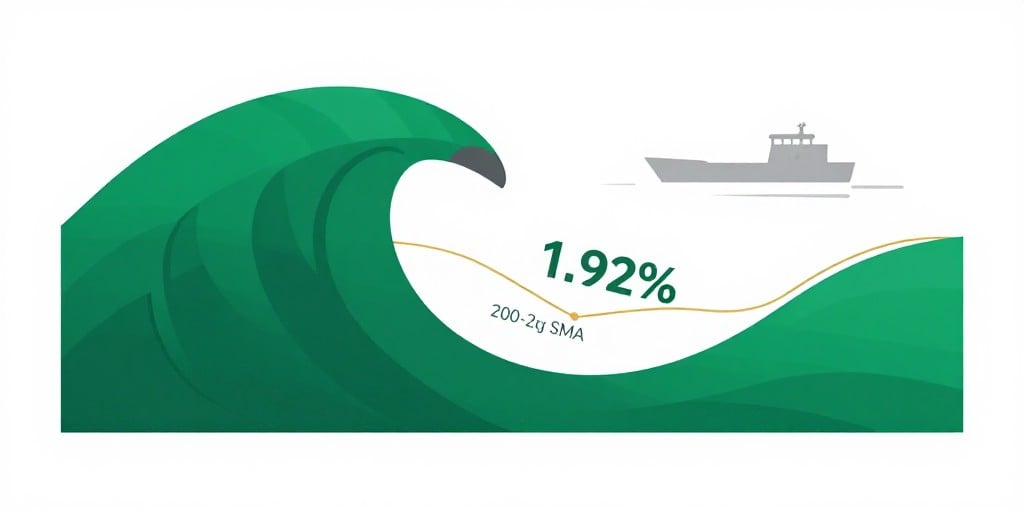
Sk Oceanplant Co. Ltd. (ticker: 100090.KS) slipped 1.96 % in the 24‑hour trading window that closed at 07:16 AM Central Europe on Monday, 26 April 2026. At the time of writing, the stock trades at KRW 9,650, down from the 52‑week low of KRW 9,780 reached on 23 October 2026—yet still well below the peak of KRW 31,600 recorded on 3 April 2026. The company’s market capitalisation has shrunk to KRW 624.2 billion, while the 200‑day simple moving average now sits at KRW 17,409.45, signalling a steep deviation from the long‑term trend.
Trading Volume and Liquidity
With a current share supply of 62.5 million, only KRW 2.7 billion worth of Sk Oceanplant shares changed hands in the last 24 hours—a volume that dwarfs the daily average, hinting at heightened volatility rather than genuine investor confidence. The rapid decline of –14.69 % since the end of March further underscores a loss of momentum.
Contextualizing the Decline
The downturn is not an isolated event. Hanwha General Insurance (000370.KS) and TLB (356860.KQ), two peers on the Korean market, both trended lower in the same period, falling –1.6 % and –2.27 %, respectively. While Hanwha trades at a modest P/E of 3.54 and TLB at a comparatively higher P/E of 22.13, their concurrent decline suggests a broader market pullback rather than company‑specific issues.
Business Fundamentals Under Scrutiny
Sk Oceanplant’s product portfolio—spanning offshore engineering components, shipbuilding modules, and a wide array of steel pipe products—positions it as a cornerstone of South Korea’s oil, gas, and wind‑farm infrastructure. Yet the company’s financials reveal a precarious balance:
| Metric | Value | Interpretation |
|---|---|---|
| Market Cap | KRW 624.2 bn | Modest relative to sector peers |
| 200‑Day SMA | KRW 17,409.45 | Stock trades at ~30 % below trend |
| 52‑Week Low/High | 9,780 / 31,600 | Recent lows still distant from peak |
| Trading Volume (24 h) | KRW 2.7 bn | Low liquidity, potential for price manipulation |
The sharp decline could be symptomatic of a loss of investor confidence in the company’s ability to sustain profitability amid tightening global demand for offshore infrastructure, escalating material costs, and intensified competition from international rivals.
Strategic Implications
- Supply Chain Vulnerabilities: The company’s reliance on imported heavy‑wall pipes and sophisticated steel fabrication processes could expose it to raw‑material price shocks.
- Market Positioning: With the global shift toward renewable energy, Sk Oceanplant’s traditional offshore oil and gas focus may need rapid recalibration.
- Capital Allocation: A market cap under KRW 650 bn limits access to capital markets for expansion or R&D, potentially stifling innovation.
Verdict
Sk Oceanplant’s recent price action is not merely a statistical footnote; it is a harbinger of deeper structural challenges. Investors must weigh the company’s historical performance against the current economic backdrop of a decelerating oil sector and a pivot to renewables. The stock’s precipitous move below the 200‑day SMA signals a potential inflection point—either a painful correction or a catalyst for strategic transformation.
The analysis presented above reflects the most recent market data and should be considered alongside broader sector dynamics and macroeconomic trends.