Target Corporation Sees Steady Decline Amid Mixed Retail Landscape
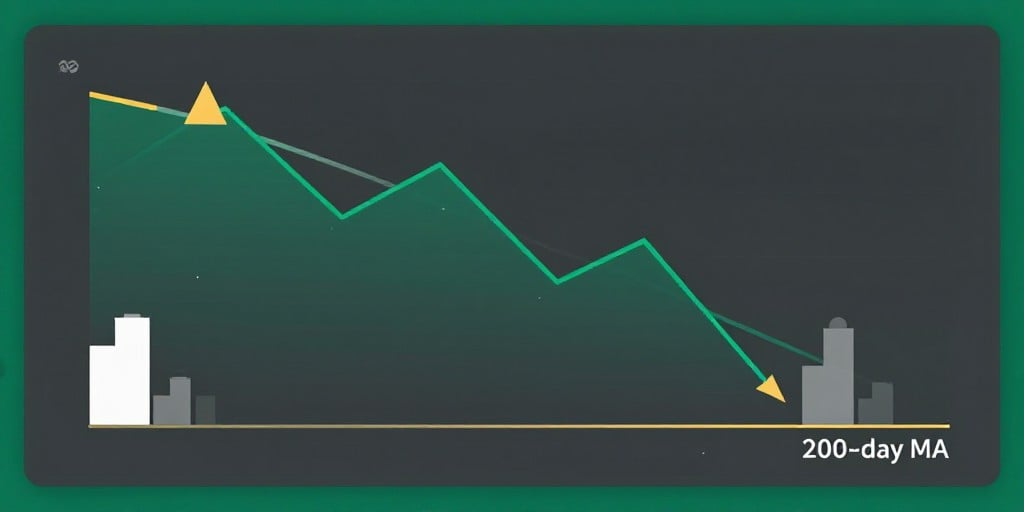
The retail behemoth Target Corporation’s stock slid -1.05 % during the 24‑hour window ending at 07:11 AM Central Europe on Thursday, 22 nd. At the close, one share trades for USD 152.38 on major exchanges, a modest dip from its recent highs but still comfortably above the 200‑day simple moving average of USD 132.43.
Market Snapshot
- Shares Outstanding: 454.3 million
- Market Capitalisation: USD 70 billion
- Volume (last 24 hrs): USD 503.2 million
- 52‑Week High: USD 170.75 (24 Aug 2026)
- 52‑Week Low: USD 83.44 (20 Nov 2025)
Since the end of last month, Target has weakened by -4.18 %, signaling a broader trend of cautious sentiment in the retail sector. While the 200‑day moving average remains a bullish anchor, the current price still sits below its peak, hinting at a potential correction or a strategic repositioning by management.
Comparative Performance in the 24‑Hour Cycle
| Stock | Ticker | 24‑Hour Change | Current Price | Market Cap (bn) | P/E Ratio |
|---|---|---|---|---|---|
| Mondelez | MDLZ | -1.95 % | USD 62.74 | USD 81.7 | 23.46 |
| Sherwin‑Williams | SHW | +0.37 % | USD 337.27 | USD 81.1 | 31.04 |
| Ecolab | ECL | -0.02 % | USD 288.09 | USD 80.8 | 38.35 |
| KKR | KKR | 0 % | USD 89.87 | USD 80.1 | 28.52 |
| Travelers Cos | TRV | +0.81 % | USD 398.95 | USD 81.1 | 10.29 |
Target’s decline is mirrored by peer downtrends such as Mondelez, while competitors like Sherwin‑Williams and Travelers Cos show modest gains. The mixed performance across the retail and consumer staples sectors underscores a sector‑wide volatility that may be driven by macro‑economic pressures, supply‑chain bottlenecks, or shifting consumer preferences.
Strategic Context
Target’s core business model—a blend of discount general merchandise, food retail, and a robust e‑commerce platform—has historically insulated it from pure‑play online competitors. However, the company’s heavy reliance on credit facilities and branded credit cards introduces additional regulatory and credit risk exposure. Its website, www.target.com , continues to serve as the digital gateway for millions of customers, but the transition to a fully integrated omnichannel experience has not yet translated into the upside Target’s valuation might demand.
Bottom Line
Target’s stock is trading below its 52‑week high yet comfortably above the long‑term average, suggesting that while the market remains cautious, the company’s fundamentals still carry weight. Investors should watch for:
- Retail‑Sector Sentiment: How macro‑economic indicators (inflation, interest rates) influence consumer spending.
- Credit Exposure: The performance of Target’s branded credit card portfolio.
- Omni‑Channel Execution: Progress in integrating online and in‑store experiences.
In a market where peers oscillate between modest gains and losses, Target’s measured slide is a warning sign rather than a catastrophic event. Stakeholders must evaluate whether the current valuation reflects a temporary wobble or a deeper shift in the company’s competitive positioning.