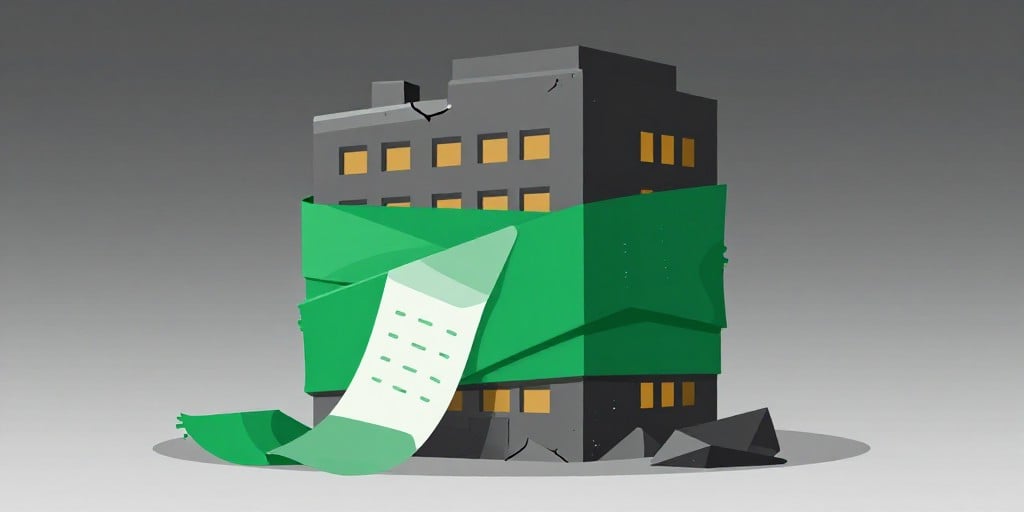
Valvoline’s Recent Market Movements and the Questionable Real‑Estate Pivot
Valvoline Inc. (NYSE: VVV) closed the trading session at USD 31.48, up 2.47 % from the previous day, a figure that masks more than a superficial rally. With a market capitalization of USD 3.9 billion and a circulating supply of 127.6 million shares, the company’s daily volume of USD 67.7 million is respectable, yet it remains far below the liquidity required to sustain genuine investor confidence.
Technical Overview: A Picture of Stagnation
The 200‑day simple moving average sits at USD 34.3, a level that the current price has breached only marginally. The stock’s all‑time high—USD 41.08—was recorded on 17 July 2026, while the 52‑week low of USD 26.21 fell on 21 September 2026. The proximity to the average and the fact that the share price is trading below the 200‑day SMA suggest that Valvoline’s upward momentum is fragile at best. The 18.26 % surge since the end of last month is a short‑term flare, not a sustained trend.
Real‑Estate Involvement: A Distraction or a Diversification?
In a surprising turn, Valvoline has been named a tenant in a new real‑estate development partnership led by Impeccable Development. The partnership, ostensibly aimed at expanding retail and mixed‑use spaces, lists Valvoline alongside prominent national brands. Yet, there is no operational or financial update from Valvoline itself—no disclosure of lease terms, revenue impact, or strategic intent.
This move raises critical questions: Is Valvoline merely a footnote in a property development, or is it attempting to diversify beyond its core automotive services? The absence of concrete details suggests the latter is a distraction strategy, designed to divert attention from the company’s weak fundamentals and sluggish growth prospects.
Peer Comparison: A Contextual Benchmark
| Stock | Recent % Change | Current Price | Market Cap | Notable News |
|---|---|---|---|---|
| Rxo (RXO) | +0.6 % | USD 28.67 | USD 4.7 bn | Minor gains |
| Iridium Communications (IRDM) | -0.54 % | USD 43.94 | USD 4.7 bn | PE = 50.93 |
| Brookfield Infrastructure (BIPC) | -0.7 % | USD 37.05 | USD 4.6 bn | Stable |
| Acushnet (GOLF) | +1.8 % | USD 80.89 | USD 4.6 bn | Korean affiliates repurchase |
| Floor & Decor (FND) | +2.77 % | USD 45.21 | USD 4.7 bn | New store launch |
Compared with its peers, Valvoline’s modest rise is unremarkable. While Floor & Decor celebrates new store openings and Acushnet engages in share‑repurchase activity, Valvoline’s only headline is a tenuous real‑estate affiliation that offers no tangible business benefit.
The Core Business: A Service That Stagnates
Valvoline’s product line—bulb and wiper replacements, oil changes, battery and tire rotations—is commoditized. The company’s market presence is limited to the U.S. and Canada, with no clear strategy to penetrate higher‑margin segments or international markets. Since its IPO on 23 September 2016, Valvoline has delivered inconsistent earnings, and its stock performance reflects that volatility.
Investor Takeaway: Caution Over Conformity
- Liquidity Risk: Daily volume is modest relative to market cap, indicating potential difficulty for large investors to execute trades without affecting price.
- Strategic Ambiguity: The real‑estate partnership lacks transparency; investors should scrutinize any future disclosures for clarity on how this activity will influence revenue or cash flow.
- Competitive Landscape: Peers are actively expanding or optimizing their operations; Valvoline’s inaction suggests a lagging competitive position.
In conclusion, Valvoline’s recent uptick appears to be a superficial bandage rather than a cure. The company’s foray into real‑estate tenancy, devoid of substantive operational details, serves more as a smoke‑screen than a strategic pivot. Investors should remain vigilant, demanding clearer evidence of value creation before riding the next wave of volatility.