Young Poong’s Decline: A Wake‑up Call for Korean Metal Markets
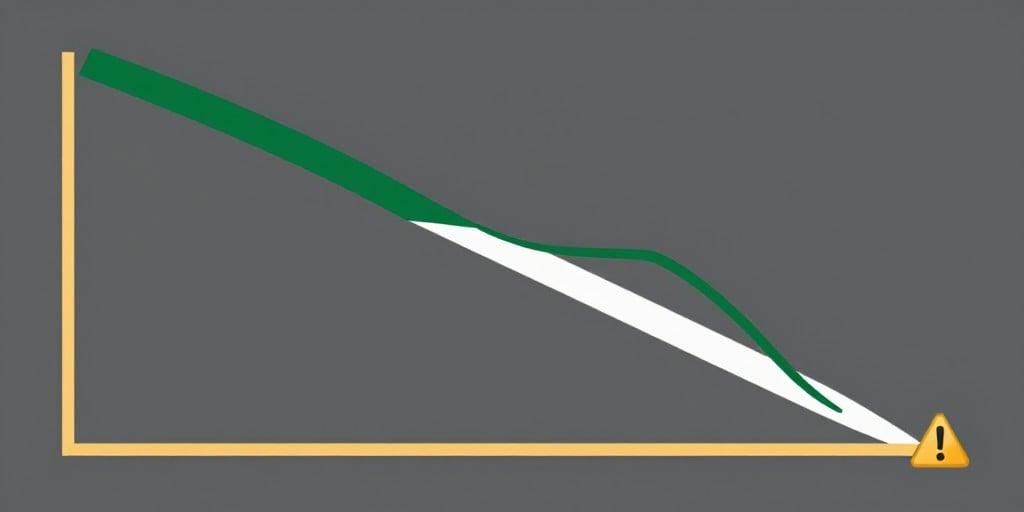
The latest trading session on the Korea Exchange delivered a stark reminder of the fragility that underlies the seemingly stable metal‑production sector. Young Poong (000670.KS) slipped 2.15 % to close at KRW 32,300, a figure that belies the company’s substantial market capitalisation of KRW 598.3 bn. The drop is not an isolated event; since the end of last month the share has fallen 27.4 %, signalling a sustained erosion of investor confidence that cannot be dismissed as a short‑term anomaly.
Quantitative Evidence of Weakness
- Trading Volume: In the last 24 hours, the exchange witnessed a modest KRW 1.2 bn worth of Young Poong shares traded, a paltry figure against a backdrop of an 18.8 million share supply. When measured against the company’s market cap, this volume is alarmingly low, suggesting a liquidity crisis that could compound further price volatility.
- Price Benchmarks: The current price sits well below the 200‑day simple moving average (KRW 49,341.26). It is also 19 % under the 52‑week high (KRW 71,650.5) and just 0.3 % above the 52‑week low (KRW 31,000). Such a narrow band of price movement is a hallmark of a company struggling to maintain a credible valuation narrative.
- Relative Valuation: Compared to peers, Young Poong’s price‑to‑earnings (P/E) ratio remains unspecified, but the lack of disclosed earnings and the steep decline in share price undermine any reasonable valuation justification.
Peer Context: A Mixed Picture
While Young Poong’s fall is conspicuous, the broader metal sector presents a more nuanced tableau:
- GS P&L (499790.KS) – Down 2.34 %, trading at KRW 35,150, with a market cap of KRW 717.2 bn and a P/E of 22.77. A modest decline that does not yet signal systemic distress.
- Elice (0158S0.KQ) – Surging 29.92 % to KRW 98,000, buoyed by a market cap of KRW 688.3 bn. The surge underscores a sectoral confidence that is not universally shared.
- Boryung (003850.KS) – Up 0.72 % to KRW 8,550, market cap KRW 705 bn, P/E 5.74, indicating a potentially undervalued but fundamentally sound position.
- HS Hyosung Advanced Material (298050.KS) – Down 0.85 % to KRW 150,100, market cap KRW 685 bn, P/E 20.24. A slight dip, but within a tolerable range for the sector.
- SNT Dynamics (003570.KS) – Down 1.59 % to KRW 27,300, market cap KRW 705.2 bn, P/E 13.91. Another minor decline, reflecting sector‑wide volatility rather than a systemic collapse.
The data reveal that Young Poong’s downward trajectory is out of step with many of its contemporaries. The company’s decline is not merely a reflection of broader market sentiment but hints at deeper operational or strategic missteps.
Strategic Implications and Critical Questions
Young Poong’s core business – non‑ferrous metal production – is exposed to volatile commodity cycles, regulatory changes, and intense global competition. Several critical questions arise:
- Operational Efficiency: Are production costs rising faster than output prices? The company’s inability to maintain profitability in a commodity‑heavy industry may be reflected in its declining share price.
- Debt Management: A lack of liquidity in the short term can exacerbate debt servicing difficulties, especially if the company relies on external financing for expansion or maintenance of facilities.
- Revenue Diversification: While the firm earns from leasing buildings, the magnitude of this stream relative to core operations is unclear. Over‑reliance on a single revenue source can magnify vulnerability.
- Governance and Transparency: The absence of a disclosed P/E ratio suggests limited transparency. Investors increasingly demand clarity, especially in sectors where financial performance can be obfuscated by complex supply chains.
Conclusion: A Call for Structural Reforms
Young Poong’s current position is emblematic of a larger systemic issue within Korea’s metal‑production sector: a reliance on legacy models that fail to adapt to rapid global shifts. The company’s declining valuation, coupled with low trading volumes and a narrow price range, signals a critical juncture. Without decisive action to overhaul operational efficiencies, improve transparency, and diversify revenue streams, Young Poong risks a precipitous fall that could reverberate across its industry peers.
In an era where capital is increasingly scarce and investors demand robust risk mitigation, Young Poong’s continued decline is not merely a warning—it is a clarion call for strategic reinvention.