YPF: A Tepid Performance Amidst a Volatile Energy Landscape
YPF (NYSE: YPF) closed its latest trading session with a modest 0.18 % uptick, a negligible gain that barely masks the underlying fragility of the Argentine energy titan. At 02:56 PM Central European Time on Wednesday, the share price hovered around USD 50.78—a figure that, when juxtaposed with its 200‑day simple moving average of USD 45.81, suggests a company merely skating above a precarious support level.
The stock’s market capitalization of USD 20.4 bn belies a staggering USD 44.3 mn of daily turnover—an order of magnitude below the liquidity typical of global energy leaders. This thin trading volume is a clear symptom of investor hesitation, even as YPF’s shares trade within a 52‑week range that spans a high of USD 57.87 (September 15, 2026) to a low of USD 25.10 (October 23, 2025). In essence, YPF is oscillating within a bubble that has shrunk dramatically over the past year, and the latest 24‑hour decline of ‑4.51 % since month‑end underscores a broader slide in confidence.
The Numbers Behind the Narrative
| Metric | Value |
|---|---|
| Current Price | USD 50.78 |
| Shares Outstanding | 392 mn |
| Market Cap | USD 20.4 bn |
| Daily Turnover | USD 44.3 mn |
| 200‑Day SMA | USD 45.81 |
| 52‑Week High | USD 57.87 |
| 52‑Week Low | USD 25.10 |
These figures paint a stark picture: YPF’s valuation sits comfortably above its recent historical high, yet the lack of robust trading volume suggests that the market remains on the fence. The company’s simple moving average—a classic indicator of medium‑term trend—languishes at a level that indicates a potential for a corrective pullback before any meaningful upward trajectory can be sustained.
Comparative Context: A Broader Sector Review
While YPF struggles to maintain momentum, other Argentine-listed stocks exhibit more vibrant dynamics, offering a useful yardstick for evaluating YPF’s performance.
Grupo Financiero Galicia (GGAL): Up 1.05 % at USD 35.46, with a market cap of USD 6.1 bn and a sky‑high P/E ratio of 96.05. The bank’s recent analyst endorsement—highlighting long‑term returns—provides a buoyant narrative that YPF lacks.
Banco Macro (BMA): Up 0.59 % at USD 63.29, market cap of USD 4.1 bn. While modest, the bank’s steady growth contrasts sharply with YPF’s stagnant outlook.
Pampa Energia (PAM): Down 2.05 % at USD 78.07, market cap of USD 4.4 bn. Despite a strategic reshuffling of its ownership structure, PAM remains under pressure, yet its share price remains resilient relative to YPF’s drift.
Telecom Argentina (TEO): Up 2.21 % at USD 12.47, market cap of USD 5.4 bn, P/E of 11.09. The telecom’s solid earnings multiple reflects a more dependable valuation framework.
America Airports (CAAP): Up 0.96 % at USD 25.16, market cap of USD 4.1 bn, P/E of 14.2. CAAP’s performance illustrates that infrastructural assets still command investor interest in a market flooded with energy volatility.
These peer comparisons highlight a critical point: while YPF’s share price is only marginally above its 200‑day SMA, its peers demonstrate either more robust growth or, at the very least, more compelling fundamentals that attract investor capital. YPF’s ability to sustain a valuation above its recent high without a corresponding increase in trading volume is a glaring warning sign.
Strategic Implications and Risks
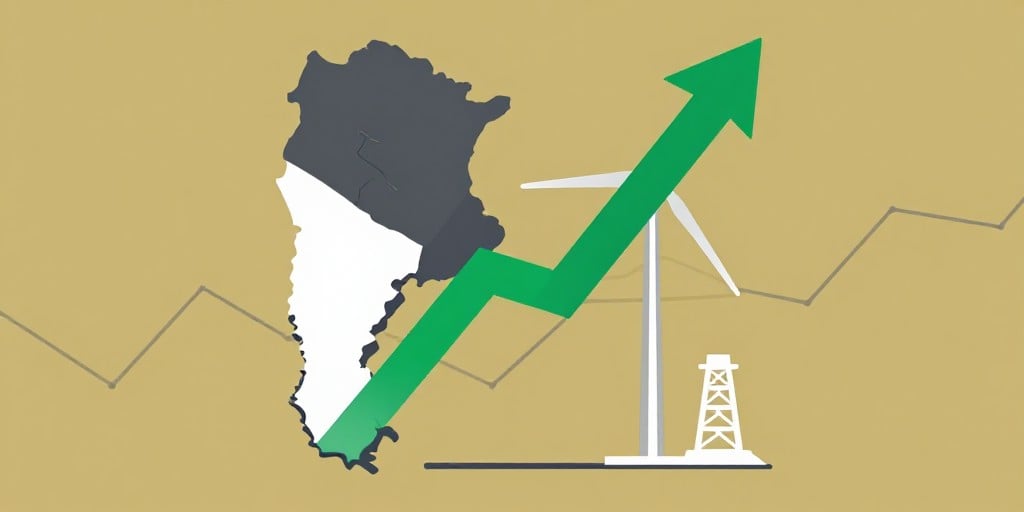
YPF’s stated focus on conventional and unconventional gas and oil, alongside a commitment to renewable sources such as wind and solar, is commendable in theory. However, the company’s operational footprint in Argentina—a country beset by currency volatility, regulatory uncertainty, and fiscal unpredictability—poses substantial risks. The reliance on a single geographic market amplifies exposure to macroeconomic shocks, and any deterioration in Argentina’s political climate could further depress YPF’s valuation.
Moreover, YPF’s lack of a compelling dividend policy or clear corporate actions to reward shareholders leaves a void that investors are unlikely to fill. In an era where earnings stability and shareholder value are paramount, YPF’s current strategy appears underwhelming.
Conclusion
YPF’s recent 0.18 % gain is a mirage that offers little insight into the company’s long‑term viability. With thin trading volume, a market cap that sits precariously above its 200‑day SMA, and a 52‑week high that has been eclipsed by a significant low, YPF is perched on a fragile financial cliff. The broader Argentine market, as evidenced by the performance of peers such as GGAL, BMA, PAM, TEO, and CAAP, suggests that investors are gravitating toward stocks with clearer growth narratives and stronger fundamentals.
For stakeholders, the message is unequivocal: YPF must either dramatically improve its operational efficiencies, broaden its geographic exposure, or provide tangible shareholder incentives to regain confidence. Without decisive action, YPF’s current trajectory portends a continued struggle to justify its valuation in the eyes of a skeptical market.